
Family
 Talking About Family in English
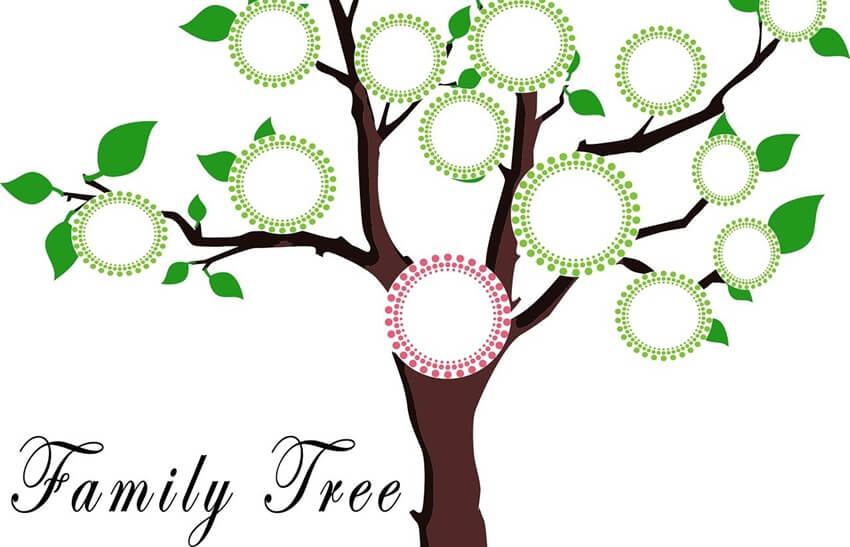
Family is one of the first topics most English learners meet – and for good reason! It’s something everyone can talk about. Whether you’re describing your parents or your children, chatting about your siblings, or explaining your complicated cousin situation, you’ll find this vocabulary useful for describing your family in English.
Learning how to describe your family helps you connect with others and understand people from different backgrounds. In English, there are many words for family members – and some of them can get confusing. For example, what’s the difference between a cousin and a nephew? Or between a stepbrother and a half-brother? This page will help you untangle all those family connections.
We’re looking at common idioms and expressions about family, like “the apple doesn’t fall far from the tree” and “the black sheep of the family”. These are often used in everyday conversation, films and TV shows. Incorporating these kind of sayings can make your English sound much more natural.
Talking about family is also a great way to practise possessives (my, your, their), descriptions (tall, funny, kind), and relationships (I get on well with my sister; I’m close to my dad).
Teachers can use this topic to create warm-up conversations, games and creative activities, such as drawing family trees and discussing family traditions around the world.
Family vocabulary
Describing your family includes your immediate family and your extended family, along with perhaps your step family and other relations. Your immediate family consists of people like your mother, father, brothers and sisters, and children, while any other relations would be in your extended family.
Immediate family
Your immediate family contains the people who are your closest relations. This list could contain:
Mother – called Mum/Mummy by children (you might also hear Ma, and Mom/Mommy in American English)
Father – called Dad/Daddy by children (you might also hear Pop or Pa)
Parents – mother and father
Son – male child
Daughter – female child
Brother – male sibling (you might also hear Bro)
Sister – female sibling (you might also hear Sis)
Sibling – brother or sister
Children – informally called ‘kids’ (you might also hear ‘kiddos’ or ‘kiddies’)
Extended family
We often talk about our “extended family”, which includes grandparents, cousins, aunts and uncles. Here are some of the family members who could be in your extended family:
Grandmother – the mother of your mother/father (you might also hear Grandma, Granny, Nan or Nana)
Grandfather / Grandad – the father of your mother/father (you might also hear Grandpa, Gramps or Pop)
Grandparents – grandmother and grandfather
Uncle – the brother of your mother or father
Aunt / Auntie – the sister of your mother or father
Cousin – the child of your aunt or uncle
Nephew – the son of your brother or sister
Niece – the daughter of your brother or sister
In-laws – your family by marriage
Mother-in-law – the mother of your spouse
Father-in-law – the father of your spouse
Sister-in-law – the sister of your spouse
Brother-in-law – the brother of your spouse
Son-in-law – the husband of your daughter
Daughter-in-law – the wife of your son
Extra tips:
- Some people call their aunts and uncles by their first names, while others always add Auntie or Uncle before the name. It often depends on how formal the family is.
- Affectionate slang names for family members, such as Gramps, Pa or Nana, are normally only used to describe your own family, not for other people’s. These terms would often be seen as too warm and familiar to use for someone else’s family members.
Other useful words for family members
Spouse – husband or wife
Partner – husband or wife; ‘partner’ can also refer to a romantic relationship where the people are not married
- The word ‘partner’ is now very common in the UK, used instead of boyfriend, girlfriend, husband or wife, when people prefer a gender neutral or modern term.
- ‘Partner’ can also feel a more ‘grown-up’ word for older people in relationship who might feel the words ‘boy/girlfriend’ sound too ‘young’.
- The phrase “my other half” (or “my better half!”) is often used as an affectionate way to talk about your husband, wife or partner.
Fiancé / fiancée – partner to whom you are engaged to be marriage
Half-brother / Half-sister – siblings who share one parent
Stepfather / Stepmother / Stepson / Stepdaughter – people become ‘step’ relations when someone is divorced and marries again (you have a new relationship with the new partner’s family, connected by marriage, not by birth).
Step relationships
A step relationship happens when a new marriage creates new family relationships. Here are the main words related to step families:
Stepfather – your mother’s new husband (not your biological father)
Stepmother – your father’s new wife (not your biological mother)
Stepson – the son of your husband or wife (from a previous relationship)
Stepdaughter – the daughter of your husband or wife (from a previous relationship)
Stepbrother / Stepsister – the children of your step-parent (you’re related by marriage, not blood)
- Tip: If you are related to someone “by blood” it means you are both in the same biological family. If you are related to someone “by marriage” it means you are only related due to a family member getting married to someone in your biological family.
Idioms and expressions about family
English has lots of idioms that use family words. Are you a “black sheep” – or maybe were you “born with a silver spoon”? Perhaps you’re the “spitting image” of one of your parents? Check out these interesting idioms and sayings related to family:
Like father, like son – Children often behave like their parents.
Runs in the family – A shared trait or habit in the family. (If someone says “It runs in the family”, they might be talking about anything from eye colour to a love of tea).
Your flesh and blood – A close family member.
Black sheep (of the family) – The odd or rebellious one.
Spitting image – Looks exactly like someone.
Chip off the old block – A child very similar in behaviour or personality to a parent.
Cut from the same cloth – The same meaning as “Chip off the old block”
Born with a silver spoon (in your mouth) – Born into a rich family.
The apple doesn’t fall far from the tree – The same meaning as “like father, like son”, i.e. the child is the “apple” and the “tree” is the parent or family member they resemble in their behaviour.
Blood is thicker than water – Family relationships (i.e. blood) are stronger than friendships (i.e. water).
Bad blood – Ongoing resentment or anger between people (often family members).
Skeleton in the cupboard – A hidden or embarrassing secret (often a family secret).
Mother hen – A very protective person, often fussing or worrying about others.
Big brother – Older brother, or if talking about politics, (intrusive) government surveillance.
Home is where the heart is – Home is where your loved ones are.
Family man / woman – A person who is very devoted to their family.
Like one of the family – Someone who isn’t related by blood, but is so close they feel like a family member.
Pets in the Family
For many people, pets are part of the family too. Whether it’s a dog that joins you on walks, a cat that steals your chair, or a goldfish that looks unimpressed by everything, pets bring warmth and personality to a home!
In English, we often talk about pets as if they were people. We call cats and dogs our “furry friends” and birds our “feathered friends”. You might hear someone call their cat or dog their “fur baby” or for multiple pets, “fur children”. Many people give their pets human names and many also celebrate their pets’ birthdays.
Having a pet can also bring new vocabulary into family life, and the EFL classroom. Students can learn words related to pets, such as “walkies”, “vet”, “treats”, “collar”, “dog bowl”, “scratching post”, “cat tree” and “litter tray”.
Pets may not appear on the family tree, but in many homes they hold a very special branch of their own. It’s always good to think about pets when discussing family in an EFL lesson, as for many people, their pets are just as important as their human family.
- Tip: Learn more dog vocabulary in our Crufts post and general animal vocabulary in our Animals page. We also have a page dedicated to bird vocabulary in our page about International Dawn Chorus Day.
Idioms and expressions about pets
Let the cat out of the bag – reveal a secret by accident
Dog tired – very tired
It’s raining cats and dogs – raining heavily
Top dog – the most important person
Every dog has its day – everyone gets a chance at success eventually
EFL lesson ideas about family
Family Tree Project
Students can draw their own family tree (real or imaginary). They need to label the family members, describe some of the people and use possessives. E.g. “This is my sister. Her name is Laura. She is a doctor.” For more advanced students, they can talk about relationships and personality. E.g. “My brother and I get on really well, but he’s more serious than me.”
Family Idioms Match
The teacher writes idioms on one set of cards and meanings on another. Students have to match them and make example sentences about their families. For example, “Punctuality doesn’t run in the family!”
Discussion Questions
The class can chat about families in pairs or in groups. Questions to direct the discussion could include:
- How big is your family?
- Do you look more like your mum or dad?
- Who are you closest to in your family?
- Do you have a “black sheep” in your family?
- What family traditions do you have?
These questions could also work as a writing task to help structure an essay called “My Family”. Students could also choose to write about fictional family instead.
The Black Sheep Game
Students have a list of funny or dramatic family facts (e.g. someone once ran away from home to join the circus). Each student secretly picks one and others must guess who the “black sheep” is by asking questions in English. It’s a fun, communicative activity that gets everyone speaking and laughing.
Pets in the Family
Teachers can ask questions like “Do you have a pet?” or “What kind of pet would you like?” and write a few animals on the board (e.g. dog, cat, hamster, fish, goat, parrot). Review or teach some useful adjectives and verbs (e.g. friendly, lazy, naughty, walk, feed, look after/care for) and give examples of short sentences such as “My cat is very lazy” or “I walk my dog every morning”.
Students can describe their real or imaginary pet, including the type of animal it is, its name and personality, and who in the family looks after it. Students can work in pairs and describe their pet without naming it, while their partner tries to guess what animal it is. This is a fun way to practise vocabulary, speaking and creativity, while thinking about beloved pets – and as we all know how cheeky our furry friends can be, it should also get some laughs!
Words and phrases related to family
Family is one of those topics that everyone can relate to, whether yours is big, small, noisy, calm or totally eccentric. Learning how to talk about family in English helps you share your story and understand others too. It seems every family has its own little dramas, secrets and “black sheep” moments!
The next time you chat about your mum, your brother, your cousin who lives on a sailboat or your aunt who lives with llamas, you’ll have the perfect English words for it.
Share your thoughts on family vocabulary
What English family idiom do you like best?
Do you think British families are similar to or different from families in your native country?
How do you describe step relations or half relatives in your native language?
How do British families seem different from families in your culture?
Do you think of your pets as your family members?
How do you usually address your parents or grandparents? Do you use nicknames or formal words?
Would you describe yourself as the “black sheep” in your family? Be honest!