Colours

Colours in English
Colours are an important part of everyday English. We use them to describe the world around us, such as clothes, objects, weather, food and emotions. Knowing colour words helps you give clear descriptions and makes your English more expressive.
For example, we might say “I bought a red dress and a black jacket” or comment that the walls are painted light grey, or that our friend has bright green eyes.
Understanding colours is useful in many everyday situations. We can use colour words when shopping, decorating, giving directions or describing people’s moods. Colours also appear in idioms and expressions, so learning them can help you understand natural, everyday English.
Colour adjectives
We can put colours in a sentence to add more interest or comment on specifics. Colours are often used as adjectives to describe something in more detail.
These colour adjectives are usually written before the noun. E.g. A red car, a yellow flower, a blue shirt. You can also use colour as part of a description. E.g. “He wore a dark blue suit” and “She painted the door light green.”
More examples:
- The sky is a moody grey today, but there are still some white, fluffy clouds.
- I like her dark blue jacket and rose pink spectacles.
- He has green eyes and a brown moustache.
- The cat’s fur is black with small patches of brown and white.
- She drove a cherry red car with tan leather seats.
Understanding colours also helps when shopping, giving directions, talking about emotions or describing designs.
Common colours in English
Here are some of the most common colour words in English:
Red, blue, yellow, green, orange, purple, pink, brown, black, white, grey
You can also add more detail by using shades and tones. English has many different tones and shades with slight subtle variations. The varieties can be seen in paints for home decorations, where hundreds of shades are available! Here are a few of the most common shades:
Blues
light blue, sky blue, navy blue, cornflower blue, royal blue, teal, cobalt, turquoise, aqua
- Turquoise is a mix of blue and green, often bright and tropical
- Teal is a mix of blue and green, softer and darker than turquoise
- Aqua is a light blue/green
- Sky blue is a mix of blue and white to give a very light blue
- Navy blue is a mix of blue and black to give a very dark blue
Reds
bright red, cherry red, blood red, scarlet, crimson, burgundy, maroon, coral
- Maroon is a mix of red and brown
- Burgundy is a mix of red and purple
- Coral is a mix of red, orange and pink
Purples
Aubergine, lilac, lavender, mauve, violet, plum
Greens
dark green, bottle green, pale green, mint green, emerald green, forest green, sea green, khaki, olive
- Khaki is a mix of green, yellow and brown, often used in military uniforms
- Olive green is a mix of green and brown, giving an soft, earthy tone
- Sea green is a light mix of green, blue and grey
- Mint green is a mix of green and white, soft and light
Pinks
rose pink, fuchsia pink, hot pink, baby pink, salmon, magenta
- Salmon is a mix of pink and orange, giving a light and warm shade
- Hot pink, magenta and fuchsia pink are all bold, bright, saturated colours
- Baby pink is a mix of pink and white, giving a very light shade
- Rose pink is a mix of pink and white, giving a rich medium pink shade, darker than baby pink
Yellows
Lemon yellow, canary yellow, mustard, gold
- Lemon yellow is a mix of yellow and white, giving a soft and light shade
- Mustard is a mix of yellow and brown, giving an earthy shade
- Canary yellow is a bright, bold yellow
- Gold is a metallic tone
Oranges
Peach, apricot, amber
- Peach is a mix of orange, pink and white
- Apricot is a mix of orange and yellow, soft and warm
- Amber is a mix of orange, yellow and brown
Browns
Chocolate brown, ginger, tan, mocha, beige
- Tan is a mix of brown and yellow, giving a warm, light shade
- Beige is a mix of brown and white, giving a soft, neutral shade
- Chocolate is a mix of brown, red and black, giving a rich and dark shade
- Mocha is a mix of brown and grey, giving a muted, creamy, cool shade of brown
Greys
Light grey, dark grey, slate grey, charcoal, silver
- Slate grey is a mix of grey and blue, giving a cool dark shade
- Charcoal is a mix of grey and black, giving a rich, dark grey
- Silver is a metallic tone
Whites
Pure white, snow white, off white, eggshell, ivory, cream, pearl
- Pure white is a stark white – bright, clean and crisp
- Off white has slightly beige or grey tones, giving a gentler, more neutral tone than pure white
- Ivory has a very slight yellow tone, making it warmer and softer than pure white (Ivory is often used for wedding dresses)
- Cream is a mix of white and yellow – a very warm and cosy tone
- Egg shell is a soft, pale white with a hint of yellow
- Pearl has a shimmering or iridescent effect
Types of colours
Pastel colours
Pastel colours are light and soft. These include colours such as pastel pink, baby blue, lemon yellow, mint green, soft lilac and lavender. Pastel colours are often used in spring and summer fashion.
Neon colours
Neon colours are very bright, glowing and saturated. These colours commonly include neon green, neon pink, electric blue and fluorescent yellow. Neon colours are used in shop signs in busy city centre streets, safety wear such as life jackets and road safety gear, and sportswear.
Metallic colours
Metallic colours are shiny and glimmer in the light. They can look quite opulent and include colours such as gold, silver, bronze and copper. All colours can have a metallic effect and you’ll often see metallic colours on cars. Other places where metallics are popular are greetings cards, decorations and in fashion accessories.
Primary and secondary colours
There are three primary colours: red, blue and yellow. These colours cannot be made by mixing other colours. They form the building blocks of all the other colours. When you mix two primary colours, you get secondary colours:
red + blue = purple
blue + yellow = green
red + yellow = orange
Colour idioms and expressions
Colours are often used in English idioms. Learning colour idioms makes your English more natural and expressive and helps you understand cultural references. We’ve collected some common colour idioms in this list:
to feel blue – to feel sad or unhappy
to see red – to feel very angry
once in a blue moon – very rarely
green with envy / the green-eyed monster – very jealous
in the red – losing money
in the black – making a profit
white lie – a small, harmless lie
green fingered – good at gardening / good with plants
yellow – cowardly
to show your true colours – to show your real character
a grey area – something that is unclear or undefined
Colours in society
Colours in English are very versatile and they appear in language, culture, sports, politics, branding and signage. This makes them a useful and interesting topic for discussion and learning. Here are some places where colours are important in day to day life.
National flags
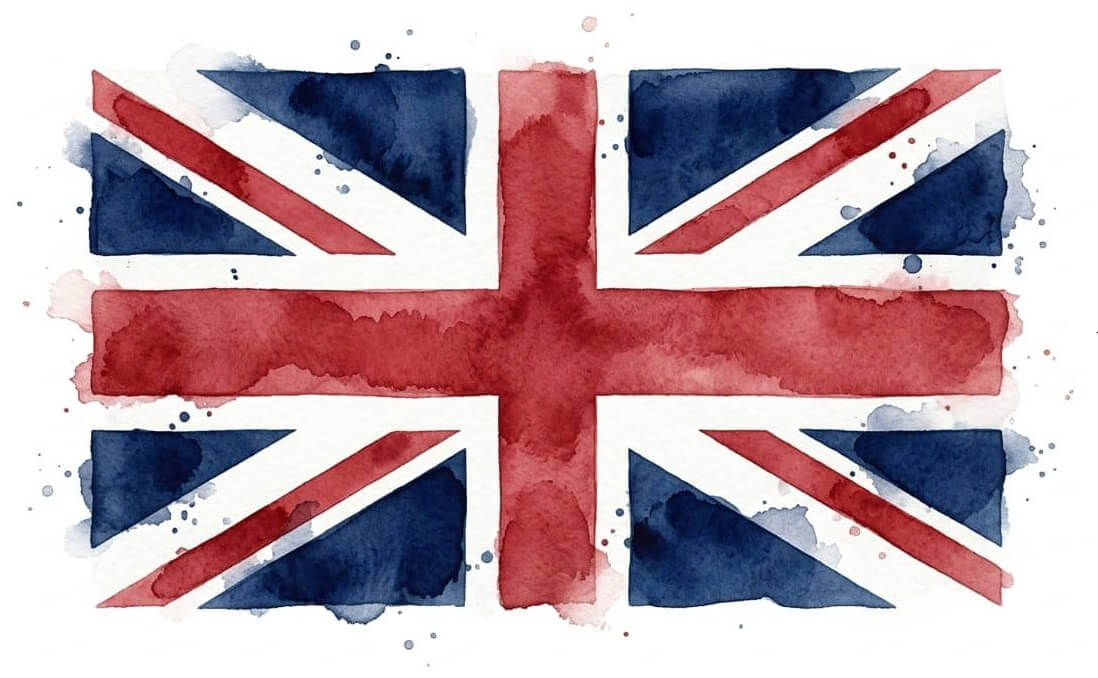
The word “colours” can mean a nation’s flag. We can say “raise the colours” to mean raise the flag of a country. Colours have been used through history to represent countries or regions. For example, the English colours are red and white; the USA colours are red, white and blue; the Irish colours are green, white and orange; the Swedish colours are blue and yellow.
Sports teams
Sports teams often have official colours. For example, the colours of Manchester United are red and white. Some clubs are even referred to by their colours: “The Reds won the match today.”
Political parties
Colours can symbolise political parties. For example, in the UK, the Conservative Party is blue, Labour is red, Liberal Democrat yellow.
Emotions and moods
Colours are used figuratively to describe feelings. For example “He’s feeling blue” means he is feeling sad, or “She’s in the red” means she owes a lot of money.
Branding and design
Companies often use colours to represent their brand. This is often linked with psychology of colour. For example, blue is associated with reliability and professionalism, black with sophistication and elegance, while red is linked with passion and power.
In branding, we often think of a brand and its colours together. For example, Coca-Cola is famous for its red and white colours, Netflix uses red and black, Adidas black and white, Louis Vuitton is known for its brown and gold colours, McDonalds is distinctly red and yellow, while Starbucks uses green and white in its logo.
Awards or rank
Some colours indicate rank, achievement or special status. For example, in martial arts, such as Karate Taekwando or Judo, a black belt shows a high level of skill.
Signs and warnings
Colours are used to communicate instructions or warnings and are used regularly in signs. For example, in the UK road signs for warnings are triangular with a red border. In traffic lights, red means stop (i.e. possible danger) and green means go (i.e. safety).
Share your thoughts
- What are your favourite colours and why?
- What colours do people wear for special occasions in your country?
- How do different colours make you feel?
- Are any colours considered lucky or unlucky in your culture?
- How would you describe your country’s flag using colour words?
- Can you think of any more idioms or expressions using colours in English? How about in your own native language?
Share your thoughts and ideas about colours in the comments.