Wedding Vocabulary Lesson: Inspired by the Royal Wedding
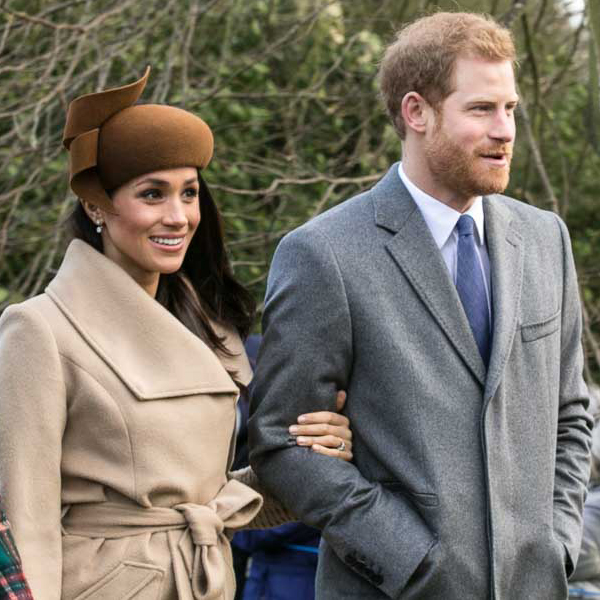
The wedding of Prince Harry and Meghan Markle took place on Saturday 19th May 2018 at St George’s Chapel at Windsor Castle. The fifth in line to the British throne became engaged to the American former actress the previous November and the union of Harry and Meghan has brought Britain and America together – although they remain two nations divided by a common language! Join us for an exploration of wedding vocabulary and words related to engagements.
Header image: Pixabay
Weddings and Engagements Vocabulary
Clarence House announced the engagement of Prince Harry and Meghan Markle on Monday 27th November 2017. The couple married on Saturday 19th May 2018 at St George’s Chapel at Windsor Castle, when they became the Duke and Duchess of Sussex.
The wedding was a spectacular and memorable event, conducted by the Archbishop of Canterbury, Justin Welby. Guests were treated to a lovely service featuring the American preacher Michael Curry and a gospel choir.
Many star names were also at the event, including Oprah Winfrey, tennis player Serena Williams, musician Elton John, actor Idris Elba, former British prime minister John Major, the Beckhams and, of course, Queen Elizabeth II and the royal family.
With the engagement announced in November and the royal wedding in the spring, this gave plenty of time for teachers to plan a suitable royal wedding EFL lesson!
The marriage of Harry and Meghan brought British and American English head to head within the royal family and the topic remains a brilliant theme for an EFL lesson. Royal weddings are packed with cultural traditions, making them a fun way to explore wedding and engagement vocabulary in the classroom.
We have collected together some wedding vocabulary and words and phrases related to engagements and marriage to help students with these terms and give teachers some lesson ideas.
It’s always a great excuse to explore British wedding traditions and learn some new words!
Engagement Vocabulary and Phrases
The couple are engaged.
The couple have got engaged / the couple became engaged / the couple were engaged.
They announced their engagement.
Prince Harry has proposed to Megan Markle.
He proposed to her / she proposed to him.
She accepted his proposal / he accepted her proposal.
He went down on one knee (traditionally, the person proposing kneels on the ground on one knee, often holding an engagement ring).
- Traditionally, the onus (responsibility) is on the man to propose to the woman. The only ‘acceptable’ time for a women to propose to a man was on a leap day. (A leap year is a year with 366 days – this happens once every four years and February 29th is the ‘leap day’). These days it is much more common for women to propose to men – and we are sure many men are happy to relinquish the responsibility!
He asked for her hand (in marriage) – old fashioned way of saying ‘he proposed’ (‘giving her hand’ refers to the man putting the engagement ring on the woman’s finger).
My fiance / fiancee – the person you are engaged to (the person you have agreed to marry).
My intended – old fashioned way of saying fiance / person you are going to marry.
The engagement happened in London.
The engagement was announced in The Times.
- Traditionally, an engagement of a high profile couple is announced in the national press – The Daily Times is a high quality English broadsheet newspaper.
They got engaged in London.
They were engaged in London.
She tried on the engagement ring.
She wore a diamond engagement ring.
Hen night / hen do – a party thrown for the bride-to-be by her friends before the wedding.
Stag night /stag do – a party thrown for the groom-to-be by his friends before the wedding.
- Traditionally, hen nights and stag nights were one night only, usually the night before the wedding day. But modern events often take place well before the wedding day and can last for more than one night. Sometimes, people enjoy stag/hen weekends and some groups even go away on holiday.
Wedding Vocabulary and Phrases
Weddings have lots of related words and expressions, in addition to many special traditions. Here is some common vocabulary related to weddings and marriages:
Marriage – the legal union of two people in marriage / a personal relationship.
Wedding – the marriage ceremony and celebration.
Marriage licence the licence couples have to obtain before being legally allowed to marry.
To get married / to marry / to wed (more informal) (verb).
To walk down the aisle – in a church wedding, the bride walks down the aisle (the central path between the rows of pews/chairs) towards the altar where the groom is waiting.
Wedding dress – a formal dress worn by the bride for the wedding.
- White is the traditional colour for a wedding gown, though many brides prefer ivory or cream. Sometimes other colours are worn, such as pink. Some brides might prefer to wear a suit or even casual clothing if it is an unconventional ceremony, such as at the beach.
Wedding ring – ring worn by the bride and groom after they are married.
Reception – the party that follows the wedding, traditionally involving a meal, speeches and dancing.
- The Reception is sometimes called a Wedding Breakfast, even though it usually happens in the afternoon!
First dance – bride and groom’s first dance at the reception, which then traditionally opens up the dance floor to everyone else.
Wedding party (the main people at the wedding – bride, groom, bridesmaids, best man).
Wedding cake –a special cake served at a wedding reception.
Speech – a talk
- Traditionally, the best man and the father of the bride give a speech at the reception. The father of the bride talks about the bride, while the best man talks about the groom. The speeches are often humorous. In modern weddings, other people in the wedding party often also give speeches, such as the bride and bridesmaids.
To give a speech.
Bride – the woman getting married.
Groom – the man getting married.
Bridesmaids – female companions/supporters of the bride – bridesmaids can be adults or children.
- The bridesmaids usually wear matching dresses, which are different from the bride’s dress. They help the bride with pre-wedding tasks, walk down the aisle ahead of the bride and appear in the wedding photos.
Page boy – a young boy in the wedding party. He might carry the rings down the aisle on a small decorative cushion to hand to the Best Man at the front. In American English this role is called the Ring Bearer.
Flower girl – a young girl in the wedding party. She walks down the aisle ahead of the bride scattering flower petals.
Maid of honour – the main female companion/supporter of the bride (the maid of honour is usually an adult). The Maid of Honour might be called Chief Bridesmaid instead. She can also be called Matron of Honour if she is already married.
- The Maid of Honour is the leader of the bride’s wedding party. She holds the bride’s bouquet during the vows, arranges the bride’s train/veil, organises the hen do, signs the register as a witness and often gives a speech at the reception.
- If a bride wants a male friend or relative as her supporter, he might be called a Bridesman or Man of Honour.
Best man – main male companion/supporter of the groom (the best man is usually an adult).
- The Best Man is the leader of the groom’s wedding party. He looks after the rings, organises the stag do, signs the register as a witness and gives a speech at the reception (often funny and containing embarrassing stories about the groom!) In American English, the Best Man is called the Groomsman.
Usher – the person who welcomes guests as they arrive and shows them to their seats before the ceremony starts.
Tuxedo – man’s formal suit with long jacket.
Top hat and tails – a traditional outfit worn by a man at a wedding consisting of a tall hat and a tail coat.
Bouquet – collection of flowers held in the hands.
- During the reception of a traditional British wedding, the bride throws her bouquet over her shoulder into a waiting group of unmarried women. Superstition dictates that the woman who catches it will be the next to get married. Some women might try to catch the bouquet, while others will try to avoid it!

Corsage – small bouquet of flowers worn on the clothes or wrist (usually for women).
Buttonhole – flower worn in the buttonhole of a jacket (usually for men).
Newly weds – people who have just married.
Confetti – small pieces of colourful paper thrown by wedding guests over the married couple (after the ceremony, when they walk out of the ceremony).
- In America, they throw uncooked rice instead of confetti.
- Sometimes people throw dried flower petals or even blow bubbles over the couple instead (especially if the venue doesn’t want tissue paper strewn around its grounds!)
‘Just married’ – the car in which the couple drive away after the wedding often has a ‘just married’ sign in the window or on the car!
Honeymoon – a holiday taken by people who have just married.
Idioms and Slang Related to Weddings and Marriage
to tie the knot / tying the knot – to get married / getting married / to marry
getting hitched – getting married.
to get spliced – to join together (in marriage).
to settle down – to create a settled life. The phrase implies buying a house, getting married and having children.
walking down the aisle – getting married (referring to the aisle in a church that the bride walks down towards the altar and her husband-to-be).
getting tied down – taking on a big commitment (often used in a negative way, implying marriage is restrictive to freedom).
getting cold feet – feeling nervous about getting married (can also be used for any big change/situation).
to call it off – to cancel the wedding (or another agreement).
save the date! – keep the date free for the special occasion (i.e. the wedding).
taking the plunge – making the decision to do any important or courageous act (like getting married!)
to elope – to go away to get married without telling anyone.
Gretna Green – a village in Scotland where eloping couples went to get married in secret.
the big day – the day of an important event, often used to describe a wedding day.
the blushing bride – an alliterative phrase often used to describe a happy bride.
mixed marriage – marriage between people of different cultures/religions/skin colours.
open marriage – marriage that is not monogamous (the wife and husband might have other partners outside the marriage).
shotgun wedding – a wedding that happens quickly.
- Often, a ‘shotgun wedding’ happened when the woman was pregnant, as it used to be frowned upon to have a baby outside marriage (due to patriarchal culture wanting women to be formally attached to a man first).
wedded bliss – happy marriage.
a happy union – often used to describe a happy marriage.
trouble and strife – ‘wife’ in cockney rhyming slang.
my ‘other half’ – referring to your spouse or partner.
‘her indoors’ – old fashioned reference to a wife.
missus – slang for wife or female partner.
Eloping to Gretna Green
In British culture, Gretna Green is famous as the place where eloping couples went to get married in secret.
In 1754, English law banned anyone under 21 from marrying without their parents’ permission, so young English couples began eloping across the border to this Scottish village, where marriage laws were more relaxed.
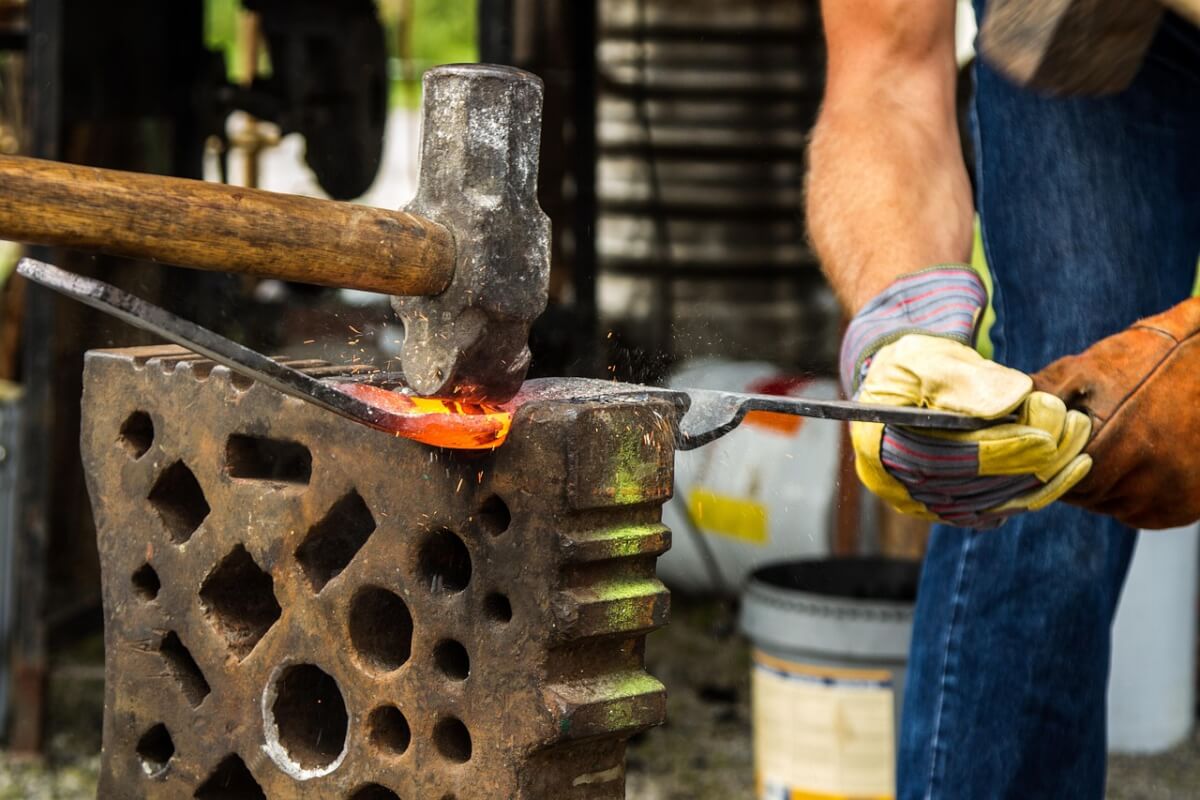
Because Scottish law allowed almost anyone to conduct a ceremony, the local blacksmith famously married couples over his anvil, sealing the marriage with a strike of his hammer!
Today, many people still visit Gretna Green every year to get married in the historic blacksmith’s shop.
Vocabulary for Gretna Green traditions
- Blacksmith (noun): A traditional craftsperson who shapes iron and other metals by heating them in a fire and hammering them by hand.
- Anvil (noun): A heavy, flat-topped iron block on which a blacksmith rests hot metal while shaping it with a hammer.
- To elope (verb): To run away secretly with a partner in order to get married, usually without telling family.
TEFL Lesson Idea: Weddings & Modern Marriage (B1–C1)
This flexible 60-minute lesson moves from practical British and American wedding vocabulary to roleplays and a classroom debate. Teachers can run the full sequence or pick and choose activities to suit their class level.
1. Warm-Up: UK vs. US Wedding Sort (10 mins)
- Set the scene. Write a mix of British and American wedding terms on the board (for example, stag do / bachelor party, hen party / bridal shower, usher / groomsman, confetti / rice, wedding breakfast / reception).
- Pair work. Ask students to match the pairs and guess which terms belong to British English and which belong to American English.
- Quick check. Review the answers as a class and clarify any cultural terms.
2. Roleplay A: The Gretna Green Elopement (10 to 15 mins)
- Set the scene. Students work in pairs. Student A plays a young person in 1754 who wants to elope to Gretna Green to get married over the anvil without their parents’ permission. Student B plays their sceptical best friend (or strict parent) who thinks the idea is crazy.
- The task. Student A tries to persuade Student B to support the runaway wedding (or even act as a witness at the blacksmith’s shop!) while Student B tries to talk them out of it.
- Target language. The pairs have to include at least four words or idioms from the lesson (elope, anvil, blacksmith, tie the knot, get cold feet, pop the question, fiancé).
- Class vote. After five minutes, some pairs can present what they decided: did they go to Scotland or did they call off the wedding?
3. Roleplay: Plan a Royal-Style Wedding (15 mins)
- Group task. Students work in small groups of three or four and act as wedding planners.
- Use the target language. Each group has fun scenario, such as a strict £2,000 budget, a rainy castle venue, or a celebrity guest list. Students have to plan the day using at least eight target words (aisle, vows, bridesmaid, bouquet, reception, toast, honeymoon, fiancé).
- Presentations. Each group pitches their wedding plan to the class in 60 seconds, then the class votes on the best event.
4. Classroom Debate: Forever or a 10-Year Contract? (20 mins)
- Introduce the premise. Traditional wedding vows promise love “till death do us part.” Ask students to imagine a new law where marriage is a 10-year renewable contract instead. After ten years, couples must choose to either renew their vows or walk away, without a divorce being necessary.
- Divide the room. The class split into two teams to brainstorm arguments for and against the idea of a ‘renewable contract’ before holding an open debate.
Discussion prompts to keep the debate moving:
- Commitment: Would a 10-year contract make couples work harder to keep their partner happy, or would it stop people from committing fully?
- Family life: How might renewable marriage contracts affect children, shared homes and family life?
- Modern marriage: More couples today choose to live together without ever tying the knot. Is marriage still necessary today or is it becoming outdated?
- Long engagements: Do you think long engagements are a good idea or a waste of time?
- Big vs. small weddings: Why do some people want to have a big public ceremony, while others want a small, intimate ceremony?
- Eloping: Why did some couples elope to get married? Do you think this is romantic or foolish?
- The money debate: Weddings can cost tens of thousands of pounds. Is it worth spending a fortune on one big day, or is it better to spend the money on a house deposit or travel?
- Wedding rules: How do you feel about modern trends where couples ban guests from taking photos on their phones or tell guests what colours to wear?
Language focus. Encourage students to use modal verbs (would, might, should) alongside relationship idioms like tie the knot, get cold feet, settle down, and call it off.
Share your thoughts on weddings and engagements
Over to you! What are wedding traditions like in your country – and would a funny British-style best man’s speech work at a wedding where you live? Share your thoughts or your most memorable wedding story in the comments below!
- Do you enjoy going to weddings? Do you find them fun/romantic/boring? What is the most memorable wedding you have ever attended?
- What is your favourite part of a traditional wedding day? (Perhaps the cake!)
- Would you try to catch the bouquet – or try to avoid it?
- Do you like long engagements or are they a waste of time?
- Is the concept of marriage still relevant today? Should marriage be replaced with something else?
- What are wedding traditions like in your country? Are there any old customs that younger couples are starting to drop?
- In Britain, the best man’s speech is famous for teasing the groom and telling embarrassing stories. Would that kind of humour work at a wedding in your country
Attributions
- Prince Harry and Meghan Markle on Christmas Day 2017 by Mark Jones [CC BY 2.0], via Wikimedia Commons
- By Big Ben in Japan (Bouquet toss 3) [CC BY-SA 2.0], via Wikimedia Commons