
Harvest Festival: Exploring Autumn Culture
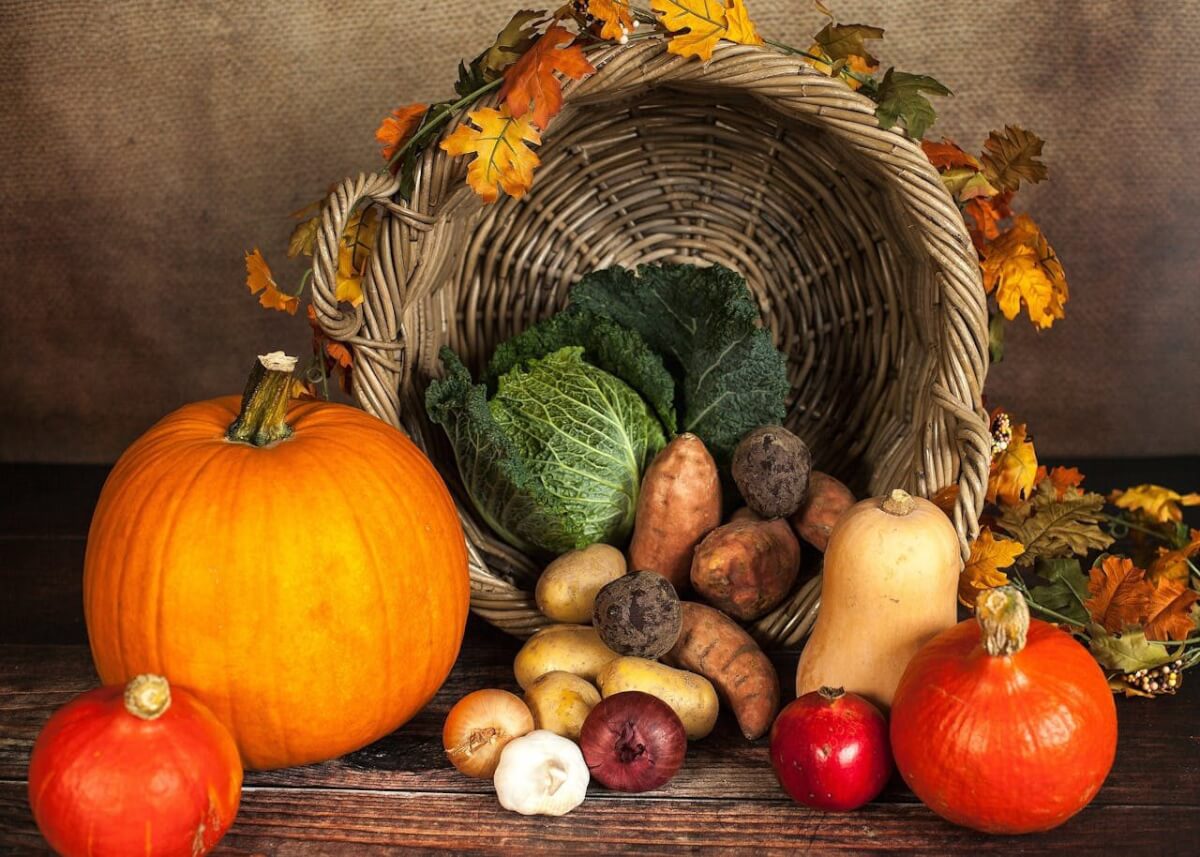 The Harvest Festival is a traditional celebration in the UK, marking the gathering of crops at the start of autumn, after the end of the summer growing season. It’s all about community, giving thanks for the harvest and sharing the food with people in need.
For EFL students, this festival is a great way to explore English language and culture, while teachers can use it to introduce autumn vocabulary and traditions. Read on to explore seasonal activities and exercises to test vocabulary knowledge!
Header mage: Pexels
When is Harvest Festival Celebrated?
Harvest Festival takes place in September or October. Unlike fixed events such as Christmas, the Harvest Festival doesn’t have a set date each year, as the harvest might be earlier or later and come at different times in different parts of the country.
Schools, churches and community groups hold their celebrations around the start of autumn.
The festival is both a cultural and, for some, a religious occasion. It highlights community, gratitude, generosity and the cycles of nature.
For EFL students, the Harvest Festival is a great opportunity to learn vocabulary related to food, seasons and traditions, and to practise speaking, reading, and writing about cultural celebrations.
How is Harvest Festival Celebrated?
The way we celebrate Harvest Festival can vary by community and location, but some common traditions include:
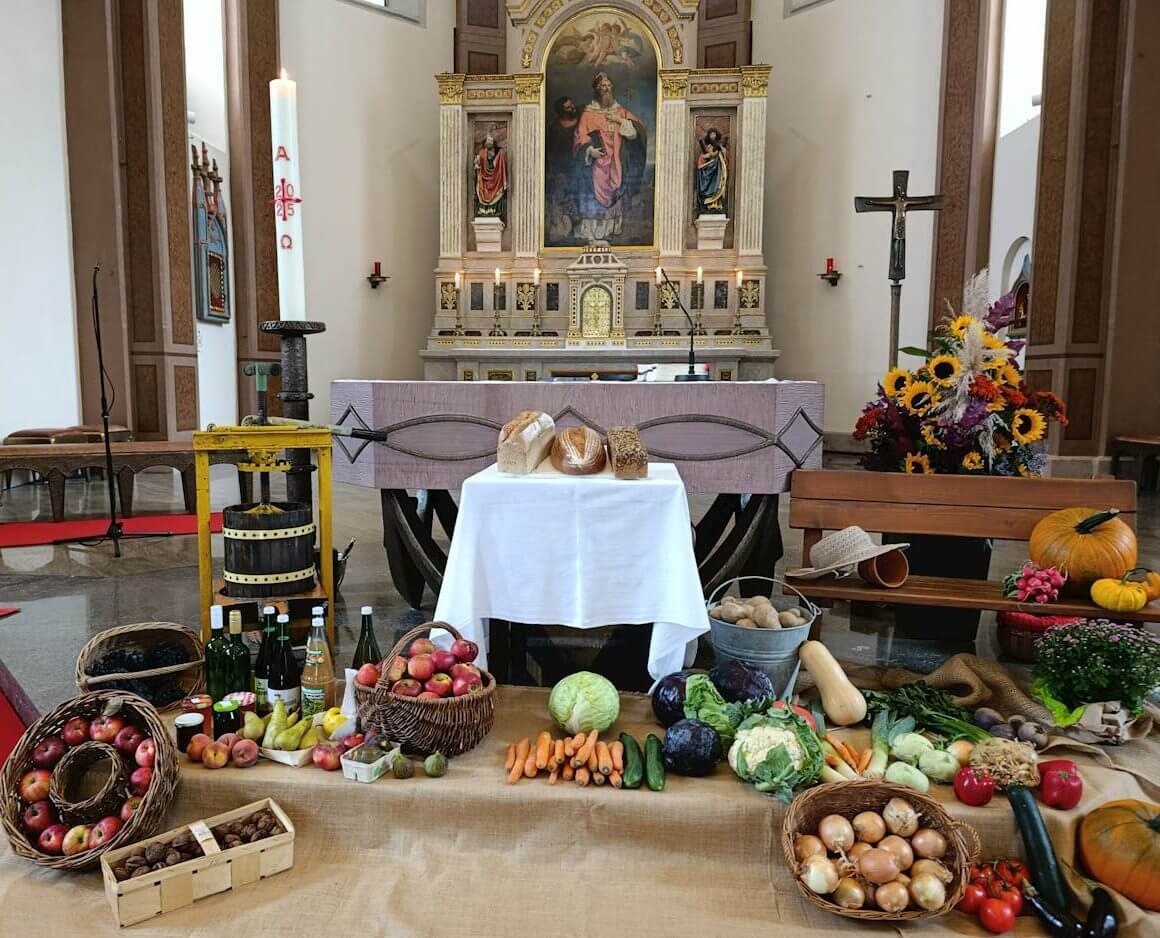
Church services: Many churches hold special services to thank God for the harvest. People bring fruit, vegetables, grains, baskets, plants and flowers to decorate the church.
School events: Children often participate in Harvest Assemblies, singing harvest songs, performing plays, making decorations and bringing in food to donate to those in need.
Community sharing: Food collected at Harvest Festival events is usually donated to food banks or shared with local charities. The food will include tinned and dry goods that won’t perish.
Festivals and fairs: Some towns hold harvest fairs, with games, competitions and stalls selling seasonal produce and local crafts.
TEFL Activities
Exercise 1 – True or False?
- Harvest Festival is celebrated on the same date every year.
- Only farmers celebrate the festival.
- It gives an opportunity for students to learn the names of different foods.
- Harvest Festival is linked to both Christian and secular traditions.
- The festival usually happens in spring.
- The festival is a time of giving and helping others.
- Churches do not celebrate the festival.
Exercise 2 – Match the Activity to the Place:
A. Singing harvest songs
B. Decorating with crops
C. Donating food
D. Playing games and visiting stalls
- Community fairs
- Churches
- Schools
- Charities
Meaning of the Harvest Festival
The Harvest Festival has strong cultural and religious significance.
It is a way to celebrate autumn, enjoy seasonal foods and bring communities together. The festival is also a time to remember the important work of farmers and be grateful for the food on our plates.
In Christian traditions, the Harvest Festival is a time of thanksgiving to God for a successful harvest. The offering of crops during church services reflects this gratitude and also reminds us of the importance of generosity and sharing.
For those who are not religious, the festival is a cultural celebration of nature, food and community.
TEFL Activity
Exercise 3 – Discussion Questions:
- Why do people celebrate the Harvest Festival?
- How is the festival similar or different in your country?
- What does “gratitude” mean, and how can you show it?
- Do you think harvest festivals are still important today? Why or why not?
- How might the festival be important for local communities?
- Why is it a good thing for school children to be involved in Harvest Festival?
Where is Harvest Festival Celebrated?
Almost every church in the UK celebrates the Harvest Festival with special decorations and services.
Most primary schools also hold Harvest Assemblies for students to celebrate Harvest Festival. Children sing songs, put on plays, hold dances, make decorations and bring in food to donate.
Community centres often organise harvest fairs, markets and communal events.
Vocabulary Related to Harvest and Autumn
Here is a list of vocabulary related to the Harvest Festival and autumn:
Harvest – the gathering of crops from the fields
Crops – plants grown for food or other uses (e.g. wheat, potatoes, apples)
Autumn – the season when Harvest Festival is celebrated
Gratitude – the feeling of being thankful
Seasonal produce – fruits and vegetables produced naturally at a particular time of year
Food bank – an organisation that gives food to people in need
Decorations – items used to make a place look festive (e.g. in autumn, this is often colourful leaves and pumpkins)
Communal / Community – shared by a group of people
Offering – a gift, often in a religious context
Harvest and Autumn Phrases
“Give thanks for the harvest” – express gratitude for the food collected
“Bring in the harvest” – collect crops from the fields
“Autumn leaves are falling” – common expression to describe the season
“Share with those in need” – donate or give to people who need help due to lack of money or resources
TEFL Activity
Exercise 4 – Fill in the Blanks:
People bring ________ and vegetables to the church for Harvest Festival.
Many schools have a ________ where children sing songs about harvest.
A ________ gives food to people who need it.
The festival is a time to show ________ for the food we have.
During autumn, farmers collect ________ from their fields.
People celebrate the harvest to thank ________ for a good crop.
EFL Teaching Ideas for Harvest and Autumn
Teachers can use Harvest Festival to teach seasonal vocabulary through pictures of fruit and vegetables and autumn scenes.
It’s a good time to discuss cultural traditions and compare with festivals in students’ home countries. Students can also write about their own harvest or autumn experiences.
Teachers could find some songs or poems about harvest to introduce more vocabulary and encourage discussion about autumn, the seasons in general, and the human connection to nature.
This could lead on to considering vocabulary related to trees, plants, autumnal foods, animals and farming.
This is also an opportunity to discuss the importance of community and tradition in the EFL classroom and encourage students to share their own ideas.
Autumn-Themed Poems for TEFL
Here are some classic English autumn-themed poems that could be suitable for a TEFL class:
To Autumn by John Keats
Keats was one of the great Romantic poets. His poem includes the famous opening line: “Season of mists and mellow fruitfulness…” It contains rich imagery of harvest, ripening fruits and falling leaves. Teachers could use this to teach adjectives like mellow, laden, ripeness and phrases describing nature.
Autumn by Elizabeth Coatsworth
This is a short and simple poem, ideal for beginner-intermediate students. There is a focus on autumn colours, falling leaves and seasonal change.
Nothing Gold Can Stay by Robert Frost
Frost’s is a very short poem, suitable for inspiring discussion about change, nature and impermanence. The vocabulary includes words such as “gold”, “leaf”, “dawn” and “Eden”.
Autumn Song by Paul Laurence Dunbar
This poem reflects on autumn as a time of reflection and melancholy. It’s ideal for discussing emotions, metaphors and season-related expressions.
When Autumn Came by Emily Dickinson
Dickenson’s poem is short with wonderful, simple imagery about the season’s arrival. The vocabulary here includes autumnal words like “brown”, “forest”, “leaf” and “chill“.

Ideas for TEFL Activities with Poems
To use poems in the EFL class, teachers can explore vocabulary matching for words like mellow, laden, ripeness and orchard with definitions. It’s also possible to use a gap fill / fill in the blanks exercise, where students can complete missing words from lines of the poem.
Discussion questions for use in a TEFL autumn poem lesson:
- What images of autumn can you see in this poem?
- How does the poet make you feel about autumn?
- Can you compare autumn in your country with the poem?
- Write a short autumn poem using 5-10 words learned from the poem.
A Closer look at To Autumn by John Keats
The first stanza of Keats’ poem To Autumn is richly evocative of an autumn day. This poem is ideal for advanced students looking at improving their vocabulary and grasp of nuance:
Season of mists and mellow fruitfulness,
Close bosom-friend of the maturing sun;
Conspiring with him how to load and bless
With fruit the vines that round the thatch-eves run;
To bend with apples the moss’d cottage-trees,
And fill all fruit with ripeness to the core;
To swell the gourd, and plump the hazel shells
With a sweet kernel; to set budding more,
And still more, later flowers for the bees,
Until they think warm days will never cease,
For Summer has o’er-brimm’d their clammy cells.
This poem can be used alongside exercises to test vocabulary comprehension. We have included a words and meanings match exercise and discussion questions for an intermediate/advanced TEFL class. Check out some vocabulary and classroom activities below:
Useful Vocabulary & Phrases from To Autumn by John Keats
Season of mists – autumn, often foggy or misty weather
Mellow fruitfulness – gentle, rich harvest with plenty of fruit
Close bosom-friend – a very close friend (autumn and the sun are described as friends)
Maturing sun – the sun as it reaches the later part of the year, ripening crops
Conspiring with – working together on a plan (often has a negative connotation, but not here)
Load and bless with fruit – fill with fruit and make fruitful
Bend with apples – branches full of apples, heavy and bent
Swelling the gourd – pumpkins becoming full and ripe
Plump the hazel shells – nuts growing full inside their shells
O’er-brimm’d – overfilled, too full
To Autumn Word Match Activity
Match the words from the poem with their meaning:
- Mellow fruitfulness
- Conspiring
- Swell
- Plump
- O’er-brimm’d
a) Working together
b) Round and full
c) Too full, overflowing
d) Gentle richness, ripeness
e) Become larger
To Autumn Discussion Questions
- What images of autumn does Keats describe in the first stanza?
- What do you think “close bosom-friend of the maturing sum” means?
Why do you think Keats chose to call autumn a “season of mists”? - Can you describe your country’s autumn using similar vocabulary?
- Which senses (sight, smell, touch, hearing) does the poem appeal to in this stanza? Give examples.
The Harvest Festival in TEFL
The Harvest Festival is a fun and cosy topic for the TEFL classroom, as it provides an interesting context to practise vocabulary, phrases, discussion and writing.
This is a time that most people in the UK either enjoy today or have fond memories of from school days. It is an especially warm, community-focused event that focuses on the spirit of helping others, volunteering and donating to those in need.
Share your thoughts
- Have you ever celebrated a harvest festival? What did you do?
- Why is giving thanks for food important?
- Which Harvest Festival activity sounds most fun to you?
- How does autumn change daily life in your country?
- Can you name other festivals about food or seasons?
- Which new words from the post did you like? Or find challenging?
- How can festivals help people learn English or more about culture?