Global Education Week: Learning Beyond the Classroom
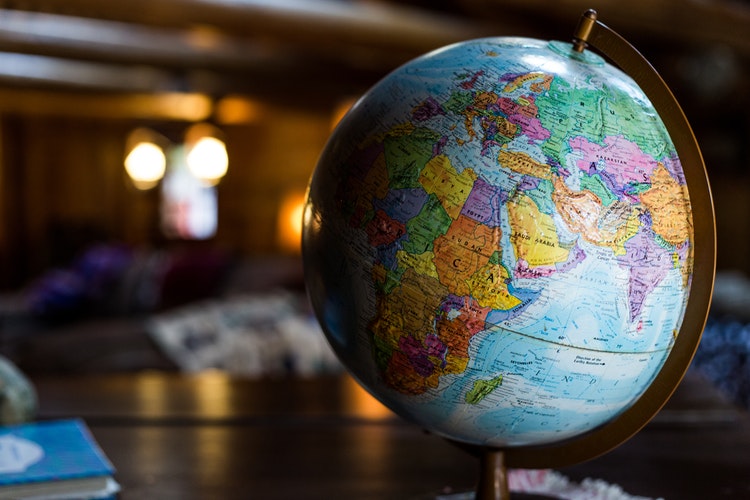
Global Education Week (GEW) is an annual event organised by the Council of Europe to celebrate and promote learning that looks beyond the classroom. It encourages us to consider how we all live together on one planet, share resources and face challenges such as climate change, inequality and conflict. These themes are ideal for a topical EFL lesson.
GEW takes place in the middle of November. This year it takes place on 16th – 22nd November 2026. Schools, universities and community groups across Europe and beyond can join in with lessons, debates, creative projects and campaigns to further the ideas and passions of the event.
We’ve created some ideas for a Global Education Week EFL lesson using vocabulary, expressions and idioms related to raising awareness and campaigning. Let’s explore!
UN Sustainable Development Goals
The theme of the event changes each year and connects with the United Nations Sustainable Development Goals. Recent themes for Global Education Week have included peace, fairness and sustainability.
Let’s crack on and explore this important event, along with some related vocabulary, expressions and idioms to add some extra flavour from the English language.
We’ve also crafted some ideas for using the themes from this event in a Global Education Week EFL lesson, which can be used in the classroom or for self study.
What is Global Education Week?
Global Education Week (often abbreviated to GEW) started in the 1990s and has grown across more than 40 countries. It’s part of the Council of Europe’s North-South Centre, which promotes intercultural understanding.
The idea was simple but powerful: to help people across Europe understand how local actions connect to global challenges.
It was created for schools, youth organisations, universities and communities who wanted to encourage critical thinking and cooperation between countries. The week has grown into an international campaign that takes place every November.
Each year has a different theme linked to the United Nations Sustainable Development Goals (SDGs), such as peace, clean energy, climate action, equality and education. These themes invite learners to think about how we can all play a role in shaping a fairer, safer and more sustainable world.
Global Education Week encourages students and teachers to explore global issues from multiple perspectives and to understand that the world’s problems (and solutions) are connected. GEW reminds us that education at its heart is about building global awareness, encouraging responsibility, and developing the skills to live together peacefully.
Global Education Week Vocabulary
Here is a list of words which are perfect for a Global Education Week EFL lesson – they are also idea for exploring similar events about equality, education and global issues. We’ve also added a definition of what each word or phrase:
Sustainability – living in a way that doesn’t harm the environment or future generations
Equality – ensuring everyone has the same rights and opportunities
Global citizenship – being aware of the wider world and your role in making it fairer
Intercultural – involving people and ideas from different cultures
Development – progress that improves living standards, health and education
Awareness – understanding or knowledge about a subject
Human rights – the basic rights and freedoms that belong to everyone
Idioms Related to Campaigning
Open your eyes – to become aware of something you hadn’t noticed before.
Bridge the gap – to reduce differences between people or groups.
Think outside the box – to be creative or unconventional.
- We often hear the cliched idiom “think outside the box” in business jargon to mean let’s think creatively or differently. It turns up in business meetings regularly! :-|
Every little helps – small actions still make a difference.
Actions speak louder than words – what you do matters more than what you say.
A drop in the ocean – a very small contribution compared to what’s needed.
All in the same boat – in the same situation, often with shared challenges.
Practice what you preach – to do what you say others should do.
- To “preach” means to speak earnestly or proclaim something. This word is often used in relation to religious sermons or public addresses.
See eye to eye – to agree with someone.
Food for thought – something that makes you think carefully.
The tip of the iceberg – a small part of something bigger.
Useful Phrases and Expressions
Here are a few expressions and phrases used in Global Education Week and similar education awareness campaigns, along with some example sentences to put them into context.
These sentences also demonstrate some useful collocations, helping to create other meaningful useful phrases using the right prepositions. For example, you can “take part in” an event or “take responsibility for” something, “learn from” someone or something and “stand up for” a principle or a person. Here are some more:
- raise awareness about an issue
- make a difference
- take part in a campaign
- build a better future
- turn hope into action
- think globally, act locally
- make the world a better place
- take responsibility for our planet
- work together for change
- learn from each other
- stand up for what’s right
- speak up about injustice
- make your voice heard
- take action locally
- promote understanding between cultures
- see the bigger picture
- bring people together
Example sentences:
- We organised an event to raise awareness about climate change during Global Education Week.
- Our school took part in Global Education Week to raise awareness about ocean pollution.
- We all agreed to take part in a campaign promoting equal education for girls.
- Many young people want to build a better future by learning about sustainability.
- Small actions can make a difference, even if they seem unimportant at first.
- The slogan “turn hope into action” reminds us that ideas only matter if we act on them.
- The teacher encouraged us to think globally, act locally by volunteering in our community.
- Learning about other countries helps students become global citizens who understand different cultures.
- Our class project focused on human rights, especially freedom of speech and education.
- We watched a video that really opened our eyes to inequality around the world.
Global Education Week EFL lesson ideas
There are many ways we can use Global Education Week in the TEFL classroom. As the theme changes every year, there’s always something new to explore. Here are a couple of EFL lesson activity ideas:
The “Global Goals” Poster
Students choose one of the 17 UN Sustainable Development Goals, such as “Clean Water and Sanitation” or “Gender Equality.” They then create a poster explaining what the goal means, why it matters, and how people can take action to support it.
Students will use vocabulary such as “awareness”, “sustainability” and “equality”, along with short persuasive phrases (e.g. the phrases explored on this page) that would be suitable for a poster.
Debate: Can Education Save the Planet?
Students split into two groups to debate the question “Can education save the planet?”. One side argues that education is essential to solving global problems, while the other argues that action is more important than knowledge.
Students will use phrases for polite discussion, agreement and disagreement, such as: “I believe that…”, “In my opinion…”, “I don’t believe that….” and “We should focus on…” This will help students to practise expressing opinions and using relevant vocabulary.
Voices for Change Project
Students choose a global issue, such as poverty, clean energy, gender equality, education, climate change, peace or health. They can prepare a short speech or paragraph about the topic, beginning with the sentence: “One thing our world needs to change is…” They can use phrases from this page, such as:
- raise awareness about…
- take action locally
- make a difference
- build a better future
Students then give their mini speeches to the group and other students can ask questions or give feedback using polite language, such as “That’s an interesting idea. How could schools help?” and “I agree because…” Alternatively this could be turned into a role play or even completed as a written exercise.
📅 Planning ahead for your EFL classes?
Explore our year-round Seasonal Events & Cultural Vocabulary Hub for themed worksheets, idioms and British cultural guides.
Share your thoughts on GEW and campaign awareness
- What global issue do you care most about?
- How can education help make the world fairer?
- Have you ever taken part in a global or local campaign?
- Do schools do enough to teach global awareness?
- Which world problem do you think could be solved first – and how?
- Teachers, what else could we include in a Global Education Week EFL lesson?