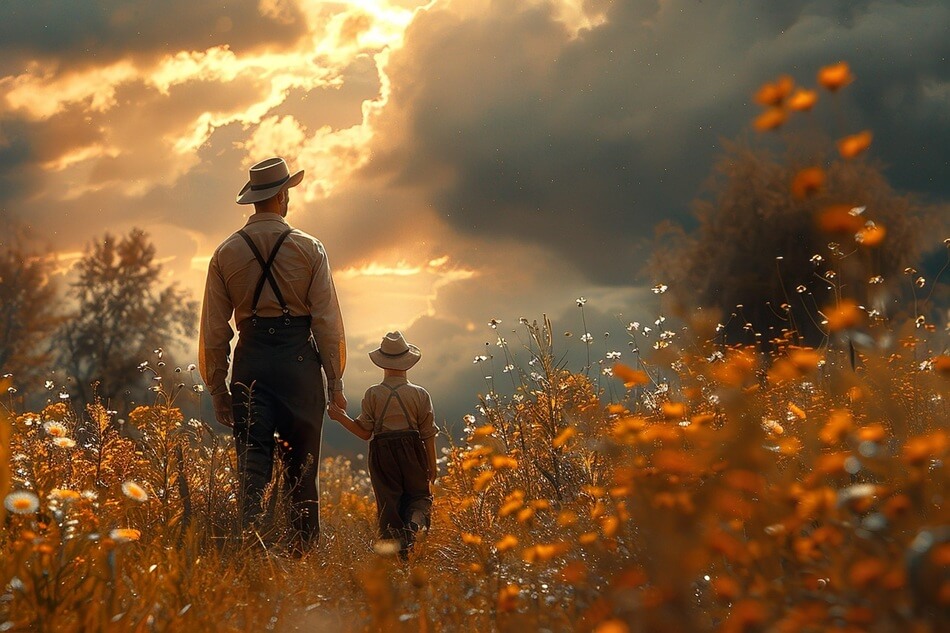
Remembrance Day: Language, the Poppy & War Poetry
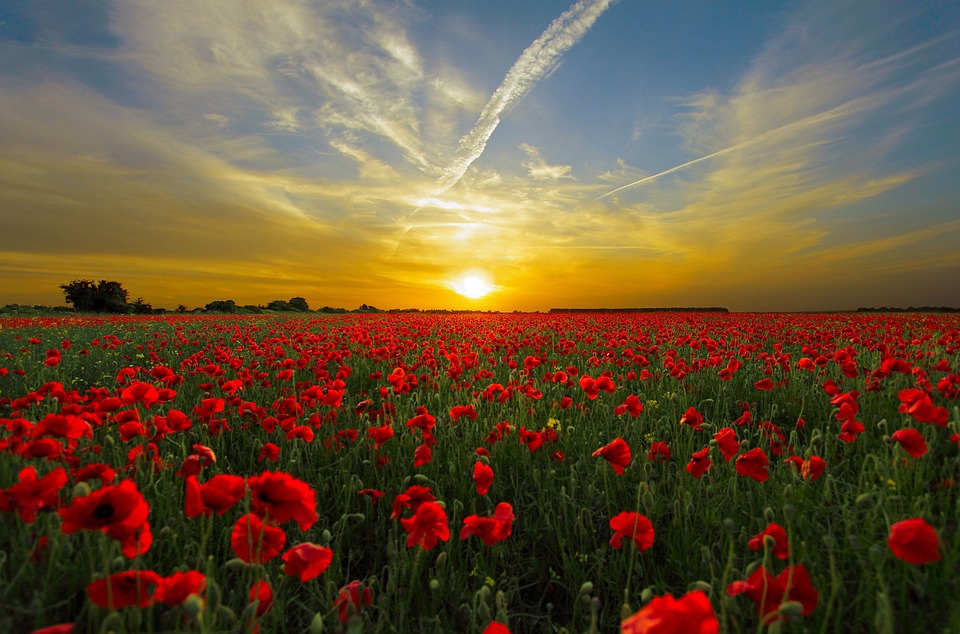
Remembrance Day, also called Armistice Day, is an important day in British culture. November 11th is the day everyone remembers the sacrifices made by the service men and women during the world wars. Traditionally, there is a two-minute silence on the eleventh hour of the eleventh day of the eleventh month. This is the moment in 1918 when the armistice became effective in Britain.
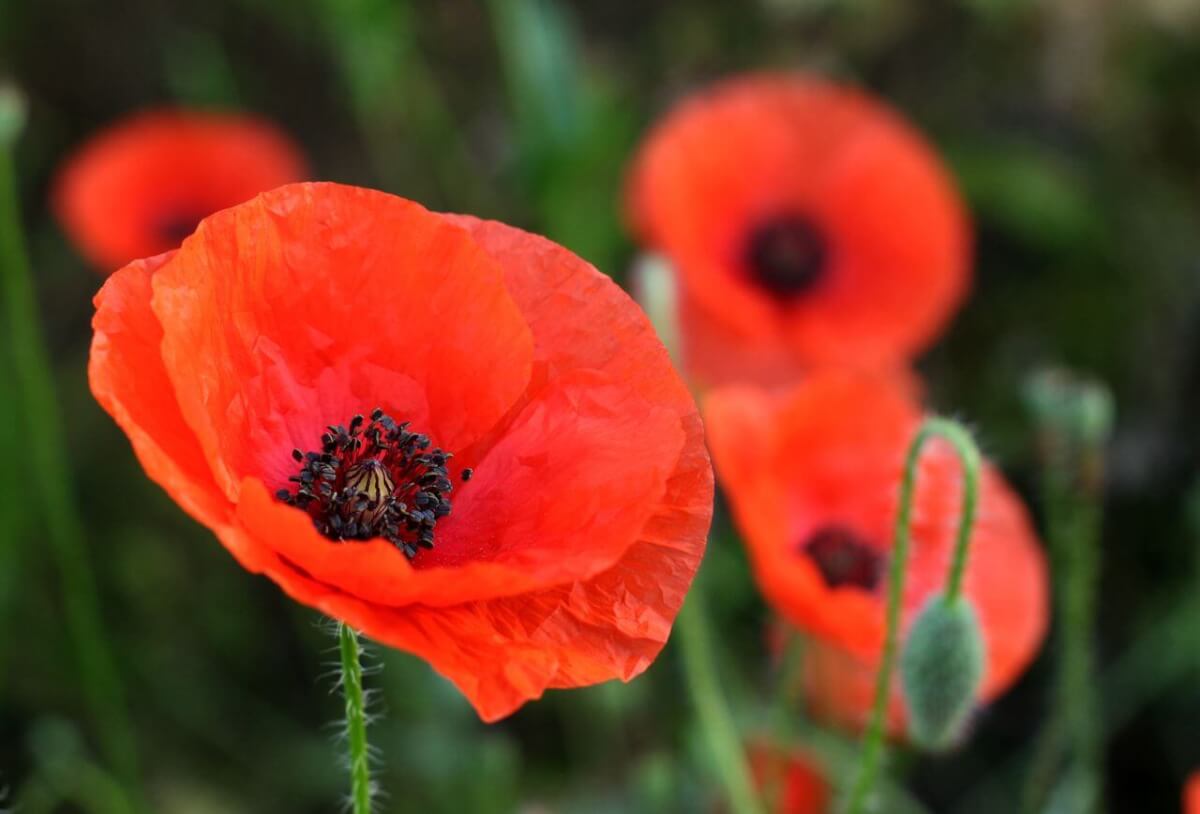
The main ceremony of remembrance takes place on the nearest Sunday – this day is called Remembrance Sunday. People wear red poppies at this time of year to show their support. Read on to learn more about this important day in British culture and explore new vocabulary in our Remembrance Day EFL lesson through two famous war poems.
Header image: Pixabay
The Eleventh Hour of the Eleventh Day of the Eleventh Month
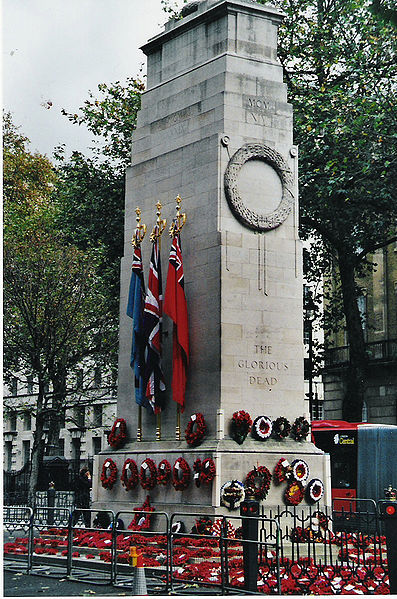
Remembrance Day was first observed in 1919 and called Armistice Day. It is also known colloquially as Poppy Day. Ceremonies are held at war memorials across the UK and in churches, while parades take place in Whitehall in London.
There is a two-minute silence on the eleventh hour of the eleventh day of the eleventh month in the UK to remember the exact moment of ceasefire in 1918, which meant that the Great War was over – the armistice. There is another two-minute silence on Remembrance Sunday, the main day of remembrance across the country.
The idea of giving a minute’s silence out of respect is an interesting concept to discuss in a Remembrance Day EFL Lesson. Do all students from different cultures observe this tradition for other special days of remembrance?
The Significance of the Poppy
In nature, poppies often grow where ground has been disturbed and Flanders fields saw much fighting and devastation during the Great War. After the fighting, poppies grew in the fields. These flowers have been linked with battlefield deaths ever since.
One place the poppies grew in particular abundance was in Flanders Fields American Cemetery and Memorial, following the burial of the dead soldiers in World War I. This cemetery can be found on the edge of the town of Waregem in Belgium.
The poppy was also selected as the emblem of Remembrance Day, as it is a flower associated with consolation and rest.
A Remembrance Day EFL lesson could explore this concept of flowers being associated with different emotions and states (for example, roses are associated with love and lilies with death).
The Poppy as an Emblem of Consolation
Poppies have been used throughout history as symbols of consolation and repose. The ancient Egyptians used poppies in their burial ceremonies as a gift to the dead which would ensure their spirit lived on.
In Roman mythology, Morpheus, the god of dreams, created a crown of poppies which he gave to those he wanted to send to sleep.
Paper poppies are sold to raise money for charity
People wear poppies on their clothing to show support for Remembrance Day. These poppies are usually made from paper, but sometimes they are worn as metal badges.
Poppies were first worn as part of the remembrance tradition in 1921 and the money raised by the sale of the poppies was used to help children in war-devastated areas.
The Royal British Legion has its own poppy factory which opened in London in 1922. The sales help support those who have served in the armed forces and their dependents.
Today, the Royal British Legion makes over 35 million poppies and 65,000 poppy wreaths each year.
Many universities and schools sell poppies to raise money for charity, so as part of a Remembrance Day EFL lesson a class could discuss poppies and young students might even like to make their own to sell.

Lest We Forget
The phrase “Lest We Forget” is often used in relation to Remembrance Day when we remember the fallen in battle. The phrase literally means “so that we don’t forget”.
It comes from Rudyard Kipling’s poem Recessional, which was in fact written for Queen Victoria’s Diamond Jubilee in 1897. The poem was intended as a commentary on the British Empire, warning of the impermanent nature of power and the need for humility. The phrase “Lest we forget – lest we forget!” appears at the end of the first four stanzas of the five-stanza poem.
Kipling took inspiration from the Bible, where in Deuteronomy 6 verse 12, it says: “Then beware lest thou forget the Lord which brought thee forth out of the land of Egypt”.
The line “lest we forget” has since been used in remembrance traditions, especially on Remembrance Day, as a phrase to honour those who have served and died in war and the sacrifices they made. The line is also sometimes added to For the Fallen by Laurence Binyon, a poem which we will explore in a moment.
A Remembrance Day EFL lesson could incorporate the phrase “lest we forget” and examine these words, how they are used and how we might rewrite them today. The phrase “Lest we forget the soldiers who died” can be rewritten in modern English as “So we don’t forget the soldiers who died”. It can also mean “Let’s never forget the soldiers who gave their lives”.
Remembrance Day TEFL lesson ideas
Remembrance Day is a sensitive topic for an TEFL class. Here are some ideas for how we can combine the war theme with EFL ideas to help students learn and practise vocabulary:
1. War Poetry to Practise Vocabulary
Remembrance Day or Armistice Day is an ideal time to learn war-related vocabulary with more advanced students. It can also give an interesting insight into British culture. Although war can be a tricky topic, using poetry as a bridge is an interesting way to explore related language with adult learners.
A Remembrance Day EFL lesson for more advanced students could use some famous war poetry to teach new vocabulary. We have selected some poems below. Look out for difficult words, which we have explained in italics:
In Flanders Fields
The poem In Flanders Fields was written in 1915 by Colonel John McCrae, a Canadian Medical Officer.
Six months prior to the Armistice, he was brought to a hospital on the French coast and saw the white cliffs of Dover across the Channel. Before he died, he said: “Tell them this … If ye break faith with us who die, we shall not sleep.”
In Flander’s Fields – Colonel John McCrae
(Challenging words for EFL students explained in italics)
In Flanders fields the poppies blow
Between the crosses, row on row,
That mark our place; and in the sky (mark – designate, point out, highlight)
The larks, still bravely singing, fly (lark – a type of bird)
Scarce heard amid the guns below. (scarce – not often, rarely)
We are Dead. Short days ago
We lived, felt dawn, saw sunset glow, (dawn – sunrise)
Loved, and were loved, and now we lie
In Flanders fields.
Take up your quarrel with the foe; (quarrel – argument; foe – enemy)
To you from falling hands we throw
The torch; be yours to hold it high. (torch – handheld light)
If ye break faith with us who die (ye – old English for ‘you’)
We shall not sleep, though poppies grow
In Flanders fields.
For the Fallen
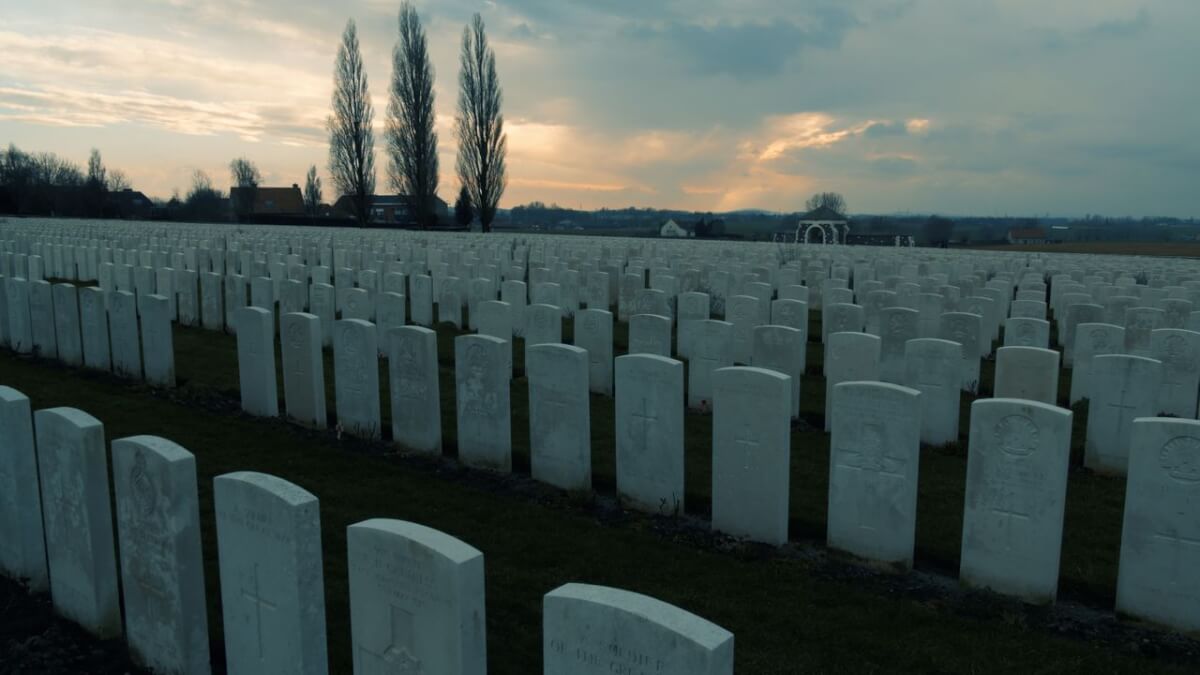
Another famous war poem is For the Fallen by Laurence Binyon.
Binyon was too old to enlist as a soldier in the First World War, but he volunteered in hospitals helping the wounded French soldiers.
Binyon’s poem was first published in The Times on September 21st, 1914, just a few weeks after the First World War began. He wrote it in honour of the casualties from the Battle of the Marne during the opening phase of the Great War on the Western Front.
This poem is known as the Ode of Remembrance in its extracted form and the fourth stanza from the poem is now used as a tribute to all war casualties:
They shall grow not old, as we that are left grow old:
Age shall not weary them, nor the years condemn.
At the going down of the sun and in the morning,
We will remember them
For the Fallen – Laurence Binyon
(Challenging words for EFL students explained in italics)
With proud thanksgiving, a mother for her children, (thanksgiving – giving of thanks – here this is unrelated to the American celebration day of Thanksgiving)
England mourns for her dead across the sea. (mourns – remembers with intense sadness)
Flesh of her flesh they were, spirit of her spirit,
Fallen in the cause of the free.
Solemn the drums thrill; Death august and royal (solemn – serious)
Sings sorrow up into immortal spheres,
There is music in the midst of desolation (desolation – destruction, emptiness)
And a glory that shines upon our tears. (glory – splendor, fame, exhalted state)
They went with songs to the battle, they were young,
Straight of limb, true of eye, steady and aglow. (aglow – glowing; ‘true of eye’ – with good vision)
They were staunch to the end against odds uncounted; (staunch – committed, loyal, firm, resolute)
They fell with their faces to the foe.
They shall grow not old, as we that are left grow old:
Age shall not weary them, nor the years condemn. (weary – tired; condemn – disapprove, censure)
At the going down of the sun and in the morning (‘going down of the sun’ – sunset)
We will remember them.
They mingle not with their laughing comrades again; (mingle – mix)
They sit no more at familiar tables of home;
They have no lot in our labour of the day-time; (to ‘have no lot’ – to have no interest/no taking part)
They sleep beyond England’s foam. (foam – froth, small bubbles of liquid)
But where our desires are and our hopes profound, (profound – deep, learned)
Felt as a well-spring that is hidden from sight, (well-spring -water source)
To the innermost heart of their own land they are known
As the stars are known to the Night;
As the stars that shall be bright when we are dust, (dust – fine particles of earth, powdered substance)
Moving in marches upon the heavenly plain; (marches – walks with military step, forward progress)
As the stars that are starry in the time of our darkness,
To the end, to the end, they remain.
2. Significance of the Poppy – Discussion and Reading
Another lesson idea could use the significance of the poppy to stimulate discussion and learn about history at the same time as language. The connection with the poppy adds an interesting angle, giving a potential springboard to discuss symbolism and how we use nature to link to ideas.
Teachers can show an image of a red poppy and ask students what it represents, and if their own countries have similar remembrance symbols. Students can also read a simple text explaining the history of the poppy, its link to Flanders Fields and how it’s worn for Remembrance Sunday.
Students will learn words such as veteran, sacrifice, honour, peace, wreath, fallen, silence, commemorate.
3. Timeline Activity – Sharing History Together
Students can also make a timeline of history together. In small groups, they can look up how different countries remember the past and honour their heroes. They will practice new words like heritage, legacy and tribute.
Each group then adds one event to a big timeline on the classroom wall or whiteboard. If students are working online, they can add images, text or links to a shared digital board, such as Mural, Miro or Padlet to build a timeline.
This exercise helps students talk to each other, practise order words (like before and after) and learn about other cultures.
Share your thoughts about Remembrance Day in EFL.
- Will you be attending a Remembrance Sunday ceremony this year?
- How would you use the day in the EFL classroom as a way to explore British culture?
- Do you have a favourite war poem?
- Are poems a good way of exploring language or do you think the vocabulary can be too difficult?
- Can you think of any other poems that are useful as language learning tools?
🌍 Looking for more meaningful classroom topics?
Explore our Awareness Days & Observances section to find real-world themes, thought-provoking discussion questions, and topical vocabulary for your next lesson.
Attributions
-
Sunset, Poppies, Field image. Free for use. Image via Pixabay [CC0 Public Domain]
-
The Cenotaph on Whitehall, London, in November 2004 (with wreaths laid down on Remembrance Day) via WikiMedia Commons. Photo by Chris Nyborg. Licensed under the Creative Commons Attribution-Share Alike 3.0 Unported license. GNU Free Documentation License.
- Charity worker/poppy seller Arthur Peacher MBE (88) recieves ‘Hall’s Heroes’ award from Channel M’s Stuart Hall. Image by Harry (Howard) Potts (Flickr: ASN46192104410667) [CC BY-SA 2.0], via Wikimedia Commons