
Voting Vocabulary for Political EFL Lessons
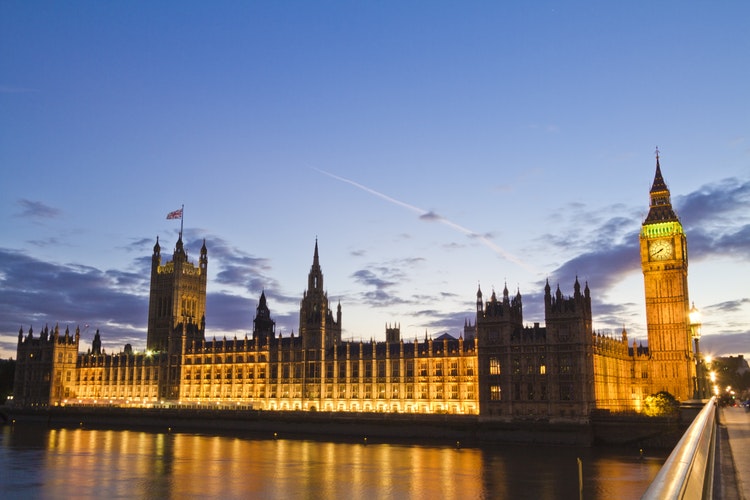 Politics is a popular topic of conversation everywhere at the moment. This gives us the perfect reason to address political and voting vocabulary in our EFL lessons. There is currently much discussion about the situations in Ukraine, Gaza, Iran and other conflicts around the world, and in Europe with the conversation about immigration and the rise of new political parties.
These concerns all lead people to question who to vote for in the next election. Which party will give them the policies they feel their country needs? Read on for some ideas and lesson options to add to a politics and voting vocabulary EFL lesson.
Politics in TEFL
Politics is always a hot topic and when voting time comes around, it’s important to be able to understand the phrases and vocabulary used surrounding elections.
Our article will help you get to grips with UK election and voting terms. We’re also exploring the various political parties and looking at the history of women’s suffrage. Teachers may like to use our article and following questions as the basis for a comprehension exercise or conversation class.
Politics is an interesting topic for non-native speakers. With all the new vocabulary flying around, EFL students may be interested to find out more about the political parties in the UK and the English voting system.
The first stop in our EFL politics lesson is political vocabulary, as there are many new words and phrases associated with UK elections and voting.
Guide to UK elections and voting vocabulary
Local Elections
In a local election, people vote for their local councillors. This usually happens on the first Thursday in May. There are usually around 150 different councils up for vote. Local elections generally concern matters in your local area, such as roads, local parks, libraries and bin collections.
Councillors standing for election can be affiliated to established political parties, such as the Conservatives or Labour, or they can be independent candidates. The office term lasts for four years.
General Elections
In a general election, each constituency in the UK elects one Member of Parliament (MP) to a seat in the House of Commons for up to 5 years.
The election is a secret ballot where the electorate (all the people who can vote) go to their local polling station, receive their ballot paper and place a cross next to the name of the candidate they want to be their representative in the House of Commons.
Each candidate represents a political party, however, sometimes a candidate is Independent, which means they are not attached to any political party.
Each political party has its own policies regarding important areas of a nation’s government, such as healthcare, education, economy, transport, military, foreign policy, domestic policy, sport and environment.
The Prime Minister of the UK
The Prime Minister is the leader of the political party that is currently in government. The PM is elected by the members of their own party. This means Keir Starmer was chosen to be PM by the Labour party members.
Political parties in the UK
In the UK, the two biggest political parties are Conservatives and Labour.
Historically, these two parties are the only ones with a big enough voting base to get into leadership alone. However, in recent times, Reform UK has been leading the polls as the favourite party to win the next election.
There are also a number of other important parties with different focuses. The parties all have logos and colours associated with them.
The main political parties in the UK are:
Conservatives, Labour, Liberal Democrats, Reform, Green Party, Scottish National Party and Plaid Cymru.
A new political party Restore Britain has just gained official status in February 2026 and is also growing rapidly.
An overview of the main political parties in the UK and their general values:
Conservative
The Conservatives, also known informally as Tories, are a centre-right political party, associated with traditional values, economic competence, lower taxation, free market capitalism, national defence, personal liberty, and limited state involvement with people’s day to day lives.
Labour
Labour is a centre-left party, associated with social justice, equality, a strong welfare state, redistribution of wealth, public ownership of main industries, and an interventionist approach, with the government more closely involved in people’s day to day lives.
Liberal Democrat
The Liberal Democrats are traditionally a centrist party, with socially liberal values and a commitment to individual freedoms. Today the party is generally perceived as being further to the left politically.
Reform
Reform UK is a right-wing populist party concerned with national sovereignty and upholding British values and culture. This party has gained a surge in support over the last years due to concerns over illegal immigration. This mirrors the growing support for right-wing parties across Europe at the moment.
Green Party
The Green Party is a far left-wing party, originally concerned with the environment (hence its name), though today focused on humanitarian issues, such as trans rights, supporting asylum seekers, and open-door policies on immigration. Although always a minority party, it has experienced more attention in recent times, especially among those keen to support increased multi-cultural diversity in Britain.
Scottish National Party
SNP is a left wing, anti-austerity party that wants independence for Scotland.
Plaid Cymru
Plaid Cymru is a left wing, anti-austerity party concerned with issues relating to Wales.
Restore Britain
Restore Britain is a new right-wing political party, concerned with protecting British interests, stopping and reversing illegal immigration, being strong on crime, and upholding British values and culture. This party only recently gained official status in February 2026, but has growing quickly and already reports a membership of over 115,000.
Independent
People are also able to stand as independent candidates, which means they are not affiliated with any political party.
Who can vote in a general election?
In the UK, to be eligible to vote in a parliamentary election you must be over 18 and a British citizen, Irish citizen or qualifying Commonwealth citizen. You must also be resident at an address in the UK or have been registered to vote in the UK within the last 15 years.
The only adults who cannot vote are those who are members of the House of Lords and convicted prisoners.
Women’s Suffrage in the UK
Women’s Suffrage refers to women’s right to vote and to the movement that fought to give women the vote. Before 1918 in the UK, women were not allowed to vote in elections.
2018 is the 100th anniversary of voting rights for women in the UK and this means Women’s Suffrage makes a great political topic for EFL lessons with lots of voting vocabulary of its own.
There is currently much discussion about women’s suffrage, the brave and inspirational Suffragettes, the peaceful Suffragists and voting history in general.
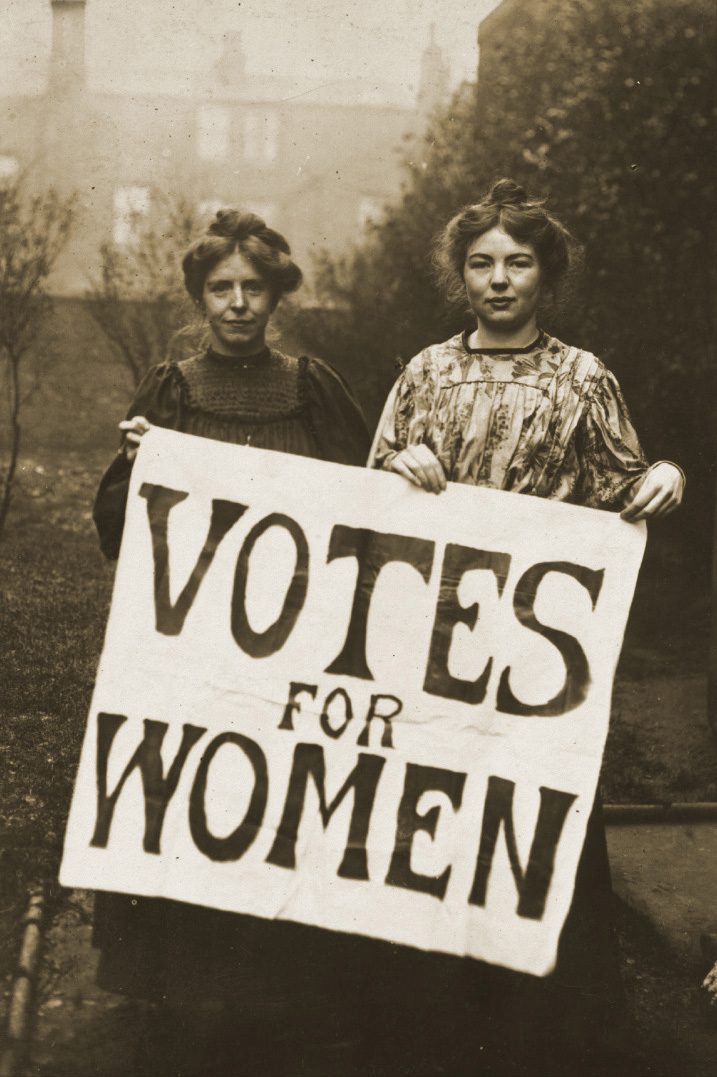
The Suffragettes were a militant group led by Emmeline Pankhurst; their motto was ‘Deeds not Words” and they used confrontational tactics to draw attention to the cause. In contrast, the Suffragists were peaceful demonstrators who tried more lawful, peaceful methods to win the vote.
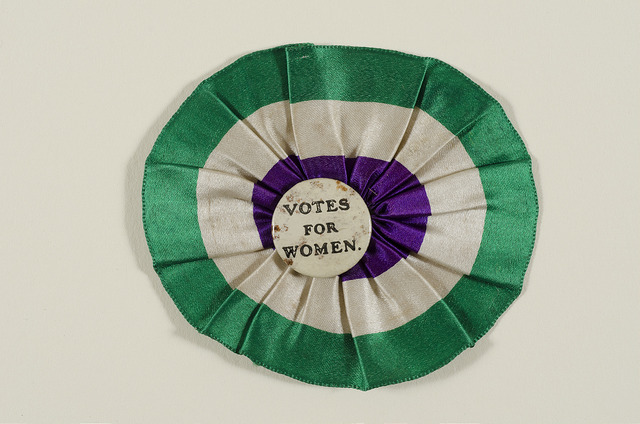
Before 1918 in the UK, women had no political voice, despite paying taxes and being required to live by the laws that were passed by parliament.
This political inequality seems impossible, shocking and absurd today, but before 1918, it was real life in the UK.
It wasn’t only women who were denied the right to vote. Working class men were also denied this basic right. In fact, the only people allowed to vote were higher class men who owned property.
Of course, this patriarchal and elitist law was created by the aristocratic male landowners themselves, who were the only ones allowed to be elected to parliament – by each other!
The Representation of the People Act of 1918 extended the vote to all men and also to some women over 30 who also met certain property qualifications (around 8.4 million women).
The Parliament (Qualification of Women) Act 1918 was also passed in the November of the same year, allowing women to be elected into Parliament. However, it was not until 1928 that all women over 21 were allowed to vote, giving them the same voting rights as men.
Election and voting vocabulary
Election – the process of choosing a new government or representative
General election – an election to determine the leading party for the country
Local election – an election to determine the councillor for the local area
By-election – an election held in a single constituency to replace an MP who has left the post
Councillor – representative for the local area (this person sits on the local council)
Council – an official body of people elected to manage the affairs of a city
Vote – the act of choosing your preferred candidate in an election
Ballot – the act of holding a secret vote
Polling station – the building where people vote
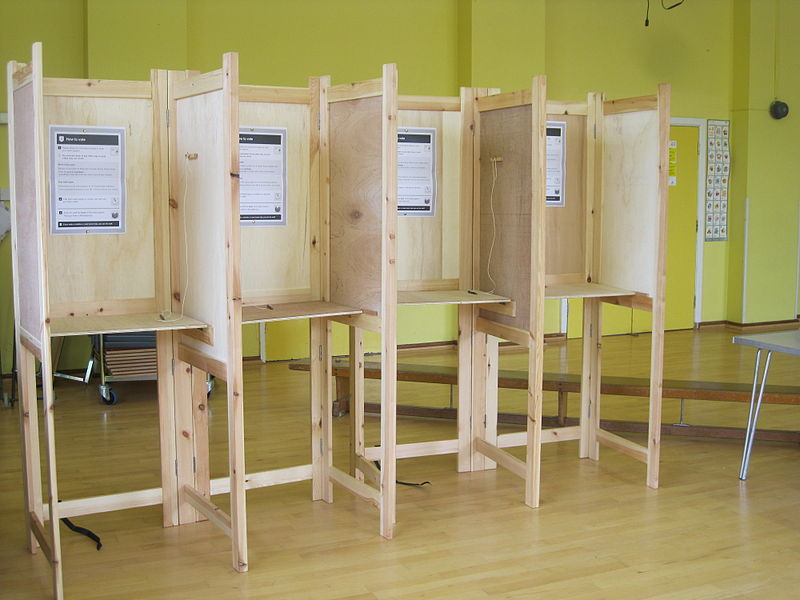
Voting booth – a small, enclosed space where people go to vote privately
Ballot paper – the piece of paper with the candidates’ names listed
Postal vote – a vote made by post
Party – organisation that aims for political power
Politician – a person who works in politics
Candidate – a person who is standing in an election
Independent – a candidate who is not attached to any party
Leader – the head person of a party
Member of Parliament (MP) – the person who represents their constituency in the House of Commons
Prime Minister (PM) – the leader of the government
The Opposition – the main party who are not in power
Party political broadcast – a television or radio broadcast advertising a certain political party
Canvassing – making direct contact with prospective voters, usually to give them details of a party’s policies and encourage them to vote for a certain candidate
Campaign – an organised effort to win an election
Leaflet – a small brochure or piece of paper with information on
Policies – acts of government (or proposals for acts of government) that alter the laws of a country
Constituency – an area of the UK that elects a member to parliament
The electorate – the people who can vote
Government – the political body that makes the laws for the country
House of Commons – the lower house in parliament. An elected body consisting of 650 members known as Members of Parliament (MPs)
House of Lords – the upper house in parliament. An appointed body consisting of members of the British peerage
Democracy – a state of government where the people choose their representatives. In the UK, the public choose their MPs to represent them in the House of Commons
Coalition – an agreement between two political parties
Manifesto – a publication of the policies, intentions, motives and views of a political party
Referendum – a direct vote by the electorate to determine a single decision
Opinion polls – an assessment of public opinion by questioning a representative sample
Hung parliament – a state of government in which no political party has an absolute majority of seats. In the UK, a party must win 326 of the 650 seats in the House of Commons in order to win an absolute majority. If this does not happen, the winning party will normally try to form a coalition with another party. The 2017 UK general election resulted in a hung parliament.

Suffrage – the right to vote in political elections
Suffragist – a person who supports the extension of suffrage, usually used in reference to women’s right to vote
Suffragette – a person who campaigned for voting rights for women in the late 19th and early 20th century. It particularly refers to members of the Women’s Social and Political Union (WSPU), founded by Emmeline Pankhurst.
Political Vocabulary for Academic English (EAP)
Once students are comfortable with standard election terms, it’s time to elevate their language for university-level study or advanced exam preparation (such as IELTS Academic or TOEFL).
In academic contexts, students need to move on from conversational descriptions to use more precise terms. For example, instead of talking about “voting” or “the party currently in charge”, academic contexts require an understanding of systemic frameworks, institutional advantages and legal processes.
The list below includes some Academic English (EAP) political terms, along with examples to demonstrate how to use them in formal discussion, plus some real-life British political context:
Enfranchise (verb) / Enfranchisement (noun) – To give a person or group the legal right to vote.
“The structural barriers to registration effectively unenfranchise younger, highly mobile demographics.”
- This is a major topic in British history and modern debate. It directly relates to historical events like the Suffragette movement (the fight for women’s enfranchisement) and current debates like lowering the UK voting age to 16.
Constituency (noun) / Constituent (noun/adj) – A body of voters in a specified area who elect a representative to a legislative body.
“Elected officials often face a conflict of interest between national party directives and the specific demands of their local constituency.”
- The UK is strictly divided into 650 geographic areas called constituencies. Every single person living in the UK is a constituent represented by their local MP in the House of Commons
Coalition (noun) – A temporary alliance of distinct parties, persons or states for joint action, often formed to manage a government when no single party wins an outright majority.
“The collapse of the multi-party coalition led to an unprecedented period of legislative gridlock.”
- While the UK usually has a single party in power, a Coalition Government occurs when no single party wins a majority (a “hung parliament”). Notable modern British examples include the Conservative-Liberal Democrat coalition and the subsequent Conservative-DUP supply agreement.
Referendum (noun) (Plural: Referendums or Referenda) – A direct vote by the electorate on a single political question that has been referred to them for a decision.
“Scholars debate whether using a nationwide referendum undermines the constitutional authority of a representative parliament.”
- The British electorate has voted in history-altering referendums. The most notable examples are the 2016 EU Referendum (Brexit) and the 2014 Scottish Independence Referendum.
Bipartisan (adjective) – Involving the agreement or cooperation of two political parties that usually oppose each other’s policies.
“Passing the sweeping environmental reform bill required a rare display of bipartisan consensus.”
While the British more frequently use the term “cross-party” (e.g. a cross-party committee), bipartisan is heavily used in UK academic texts and political journalism to describe rare moments when the Government and the Opposition agree on major legislation.
Electorate (noun) – All the people in a country or area who are entitled to vote in an election.
“Demographic shifts suggest that the modern electorate is becoming increasingly polarised on socio-economic issues.”
• In the UK, this refers directly to the roughly 46+ million British, Irish and Commonwealth citizens who are registered and eligible to vote in a general election.
Incumbent (noun/adjective) – The holder of an office or post during a specific election cycle.
Academic Example: “Historical voting data demonstrates that incumbent candidates retain a significant institutional advantage during economic downturns.”
In the UK system, this refers to the current MP holding a seat prior to an election being called, or the current governing party defending its position.
Gerrymander (verb/noun) – To manipulate the boundaries of an electoral constituency so as to favour one party.
“Independent commissions are frequently proposed as a mechanism to prevent parties from gerrymandering legislative districts.”
- While UK constituency boundaries are adjusted by independent, non-partisan Boundary Commissions to keep them fair, the term gerrymandering is studied extensively in British universities to evaluate electoral fairness and compare the UK system to international setups.
Presenting election vocabulary
Teachers can present voting and election vocabulary to the class before discussing the words in more detail. It is always useful to prepare some comprehension questions to ensure students have grasped the meaning of the new vocabulary.
Here are some interesting questions to ask in class to stimulate more discussion about voting in general. These questions are ideal for students wanting to practise their speaking skills in a conversation class:
Questions to ask about politics, voting and elections:
- Are you going to vote in the general election? Did you vote in the election?
- Who will/did you vote for? (This is a very personal question, so be careful!)
- What is the minimum voting age in your country? Should the voting age be reduced to 16 in the UK?
- How many votes did the top candidate get in your constituency?
- Have you ever voted in an election? How did you feel about the process?
- Should anyone not have the right to vote in an election? Why?
- Where is your closest polling station?
- Would you like to be an MP? What would you most enjoy about being an MP? What would you least enjoy?
- If you were launching a new political party, what policies would you include in your manifesto?
- Would you have been a Suffragette?
- Who would be your ideal Prime Minister? Why?
- What new laws would you like to introduce?
Discussing election results in the EFL class
Politics is always a fascinating subject for discussion whenever learning about a new culture and every country has its own political history.
In any democratic election, the successful party is usually the party who most strongly connects with current public concerns.
If a more extreme party is elected, either very right-wing or very left-wing, it is often due to a backlash against some current issues or problems in society. Naturally, there is then usually a backlash against that backlash – and next time a different party is elected.
Political power tends to swing from one side to the other in this way, before eventually reaching a comfortable middle ground. Then another event or crisis occurs to start a new backlash – and the pendulum starts to swing again.
Always remember when discussing politics in EFL lessons that some people feel very passionately about certain issues, so the debate could become heated and tempers could flare.
Try to keep the discussion objective, general and language-focused. Keep discussion sensitive to all angles and try not to give personal opinions. If the atmosphere looks to be getting too charged, redirect the discussion to a purely language issue, such as the vocabulary of voting and useful words like politician and polling booth.
One good way to incorporate politics into an advanced EFL class is to encourage students to write their own party manifesto. What new policies would they introduce? It’s best if this is treated humorously and students talk about introducing silly policies, such as free cakes for everyone on Fridays!
What do you think?
Which voting vocabulary is the most difficult to understand?
Do you have any tips for a successful politics themed EFL lessons?
Do you have any other important political words for the election vocabulary list?
How do you deal with controversial subjects in the EFL class?
What other areas do you think should be covered in a voting vocabulary EFL lesson?
Attributions
- Votes for Women rosette, c.1913. Silk rosette made from ribbon in white, green and purple, with button badge at centre. The badge is enamel, white with black inscription ‘Votes for Women’ produced by the Women’s Social & Political Union (WSPU). Image by LSE Library via Flickr [Public Domain]
- WSPU leaders Annie Kenney (left) and Christabel Pankhurst (circa 1908) unknown author, [Public domain] via Wikimedia Commons
- A polling booth in the w:New Forest for the UK vote change referendum and local government election. Image by Microchip08 [CC0], from Wikimedia Commons
- David Cameron and Nick Clegg in Paris – Prime Minister David Cameron and Deputy Prime Minister Nick Clegg at the GREAT Mini launch in Paris’ Gare du Nord on 17 February 2012, attending the UK-France summit. Image by UK in France via Flickr, [CC BY-ND 2.0]
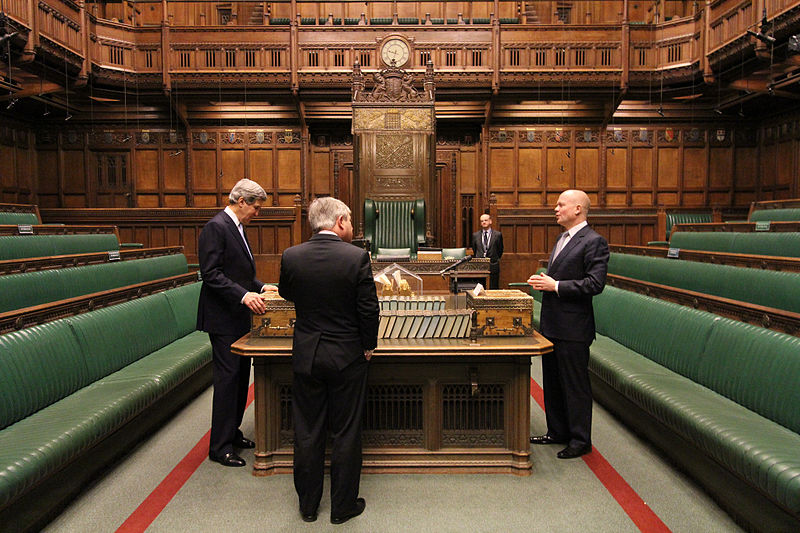
- Secretary of State John Kerry, House of Commons Speaker John Bercow, and UK Foreign Secretary William Hague in the House of Commons chamber, in London, on February 25, 2013. Image by U.S. Department of State [Public domain], via Wikimedia Commons