Movie Vocabulary: And the Oscar goes to…
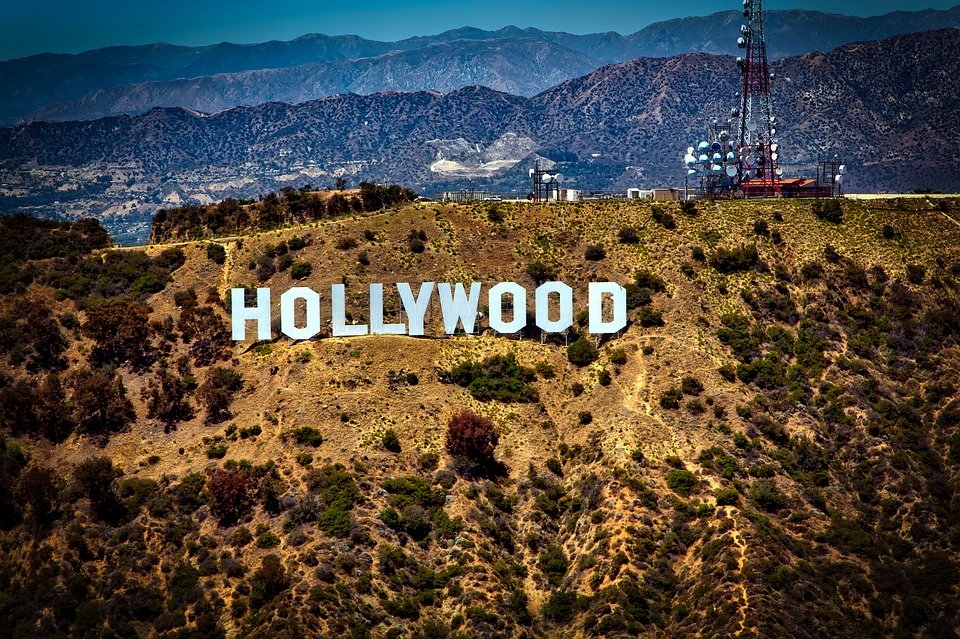 The glitz and excitement of The Oscars is upon us again! To join in the cinematic fun, we’ve prepared some English film vocabulary and idioms related to the world of movie-making. We also have a brief history of the Oscars with quiz questions and discussion ideas, all perfect to use in an Oscars-themed EFL lesson. So prepare the EFL stage: Lights, camera…. action!
Whether you love blockbusters, indie dramas or classic cinema, the world of show business has its own unique language.
Before we dive into the glitz and glam of Hollywood, you might want to brush up on our essential entertainment vocabulary guide.
Today, we’re looking at the oldest and most prestigious awards ceremony of them all: the Oscars.
History of The Academy Awards (“The Oscars”)
The Academy Awards (famously known as the Oscars) is Hollywood’s oldest and most prestigious awards ceremony. But where did it all start?
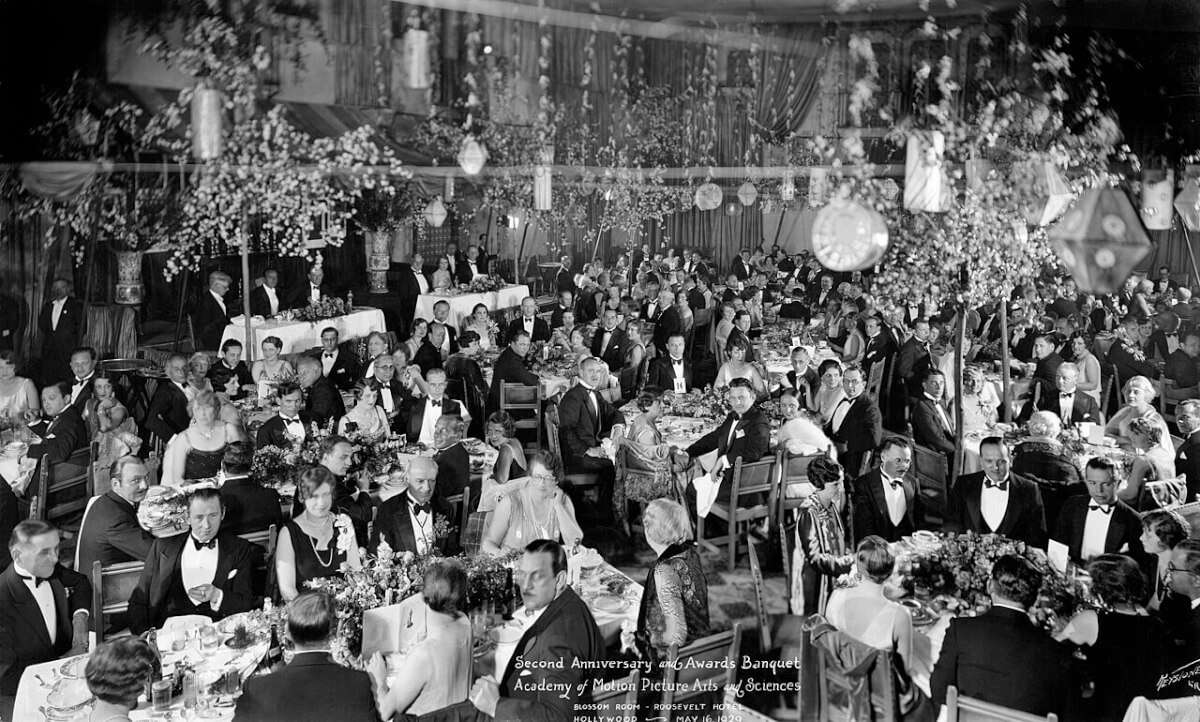
The story began in 1929 at a private dinner at the Hollywood Roosevelt Hotel. The event was created by Louis B. Mayer, the head of the powerful film studio Metro-Goldwyn-Mayer (MGM).
Unlike today’s multi-hour televised events, the first ceremony lasted just 15 minutes and had an audience of only 270 people. Tickets cost $5 and the winners had already been announced to the public three months in advance!
Over nearly a century, the ceremony has evolved alongside the film industry itself:
The Golden Age: In 1930, the results were kept secret for the first time, leading to the famous sealed envelope system we use today.
The Move to Media: The Oscars were broadcast on the radio for the first time in 1930 and made their television debut in 1953.
Global Reach: Today, the ceremony is broadcast live to millions of movie lovers in over 200 countries worldwide.
Why is it Called an “Oscar”?
The official name of the prize is the Academy Award of Merit, but its nickname remains a bit of a Hollywood mystery.
The most popular legend says that Margaret Herrick, the Academy’s librarian, took one look at the gold-plated statuette in the 1930s and remarked that it looked exactly like her “Uncle Oscar.”
The name stuck, and the Academy officially adopted the name in 1939.
If you want to explore the history of old Hollywood further, you can find official links to Louis B. Mayer, Margaret Herrick, MGM and the Hollywood Roosevelt Hotel in our Resources section at the bottom of this page.
Reading Comprehension: Test Your Knowledge!
Now that you’ve read about the origins of the Academy Awards, try these three multiple-choice questions to test your reading skills:
1. How did the first Academy Awards ceremony differ from modern ceremonies?
- A) It was broadcast on television worldwide.
- B) It was a short, private event with pre-announced winners.
- C) The tickets were too expensive for the general public.
- D) It lasted for several hours at a famous cinema.
2. Why did the Academy introduce the famous “sealed envelope” system in 1930?
- A) To stop the statuettes from being stolen.
- B) To ensure the results were kept secret until the announcement.
- C) To send the results directly to the radio stations.
- D) To save time during the 15-minute dinner.
3. According to Hollywood legend, who is the “Oscar” statuette named after?
- A) A famous actor from the Golden Age of cinema.
- B) The head of the Metro-Goldwyn-Mayer film studio.
- C) The relative of an Academy librarian.
- D) The director who hosted the first private dinner.
Answer Key (For Teachers and Self-Study)
- 1. B. The text notes that the first ceremony lasted just 15 minutes, was a private dinner and the winners had already been announced to the public three months in advance.
- 2. B. The text states that results were kept secret for the first time in 1930, which led directly to the development of the sealed envelope system.
- 3. C. Legend says that the Academy’s librarian, Margaret Herrick, commented that the gold-plated statuette looked exactly like her “Uncle Oscar”.
Movie Vocabulary for EFL Lessons
The rich history of the Oscars provides a great reading foundation for language learners. To build on this, use the vocabulary and idiomatic language resources below to enjoy a complete film-themed EFL lesson. From historical milestones to modern blockbusters, Hollywood has a language all its own!
The Oscars give a spring board to introduce plenty of film vocabulary and movie-related phrases.
These new words are great for EFL students to learn in order to improve their knowledge of collocations and enable them to understand all the movie talk at this time of year.
This is also useful for when going to the cinema, chatting with friends, watching films on TV and other social situations.
These words and phrases are ideally suited to using in an EFL vocabulary lesson. From actors and extras to cameras and the box office, here is some useful film vocabulary and a few movie phrases related to the Oscars, all presented in contextual sentences:
A film is also called a movie or in more traditional parlance, a picture (people used to talk about ‘going to the pictures‘ when they went to the cinema)
To rave about an actor’s performance’ means to praise it
A highly popular film is called a blockbuster
An unpopular film is called a flop
The box office used to be where cinema goers went to buy their tickets. Today it is more commonly used to refer to the film ticket sales
The Oscars is the informal name for the Academy Awards, a famous awards ceremony celebrating the year’s achievements in cinema
The films that are shortlisted for an award are the nominations (shortlisted people are the nominees)
The person who wins an Oscar gives an acceptance speech when they collect their award
A film with no sound track is called a silent movie
A movie buff is someone who knows a lot about films
To shoot a film means to make a film
An understudy is an actor who studies a role as a potential replacement for the main actor
The names that appear at the end of the film (giving details of the people involved in the making of the film) are the credits
If a film is shot on location it means it is made in a real place, not in a studio
The objects used in a film scene are called props
The adverts for films shown before the main film at a cinema are called the trailers and sometimes the coming attractions
If a character in a film is involved in a physically violent or dangerous scene, usually a stuntman or stuntwoman is used instead of the actor
If a film is running at slower than normal speed it is using slow motion
The actors who are not main characters in a film, but just appear in the background, usually in non-speaking roles, are called extras.
If a voice of the narrator is heard in the film this is called a voice-over
A film made with computer graphics is called a digitally animated film or an animation
If a film is translated into another language using voice-overs the film is dubbed
A film that has a translation using words along the bottom of the screen is using subtitles
Film Genres
Some popular film genres we can enjoy at the cinema include:
Thriller | drama | horror | comedy | action | fantasy | western | musical | cartoon | animation | documentary | gangster | mafia | crime | science fiction | war | psychological | romance | action | biography / biopic | history | film noir | political | black comedy | spoof | epic | adventure | family
EFL Lessons with Film Vocabulary
There is so much film vocabulary to present related to the movie world that there is plenty of scope for a number of film-based EFL lessons. This EFL film vocabulary can be used for all kinds of different lessons.
One of the best types of lessons uses gap-fill sheets to test new vocabulary and put it into context, while there are various other kinds of comprehension exercises that can be used to test the new vocabulary and phrases.
Students can practise the vocabulary by placing the new words into sentences of their own, writing about their experiences when working on an imaginary film set, as an actor, director or extra.
Advanced Students
For advanced EFL students, it can be useful to show a short film or a couple of scenes from a film and then ask students to answer comprehension questions about it afterwards. This is a great exercise for EFL listening skills.
There are also many advanced idioms for students looking to sound like a native:
Cinematic & Theatrical Idioms
To steal the show – To get more attention or praise than anyone else by being the best performer or part of an event.
“Although she was only a supporting actress, her brilliant performance completely stole the show.”
To wait in the wings – To be ready and prepared to take over a role or position as soon as the opportunity arises (from actors waiting off-stage for their cue)
“With the current director planning to retire next year, several highly qualified candidates are waiting in the wings.”
A hard act to follow – Someone or something that has been so successful or excellent that it will be very difficult for the next person to do as well.
“The previous festival coordinator did a spectacular job; she is going to be a very hard act to follow.”
To play second fiddle – To take a subordinate, less important, or supporting role behind someone else.
“He spent years playing second fiddle to more famous actors before finally landing a leading role.”
To wait for the curtain to fall – To wait for something (such as a dramatic situation, a career or an era) to come to its natural or inevitable end.
“The struggling film studio knew production was losing money, and they were simply waiting for the curtain to fall on the project.”
Discussion on Equal Representation and #MeToo
Another interesting topic for discussion in an advanced EFL class would be the conversation around equality in the film industry and media in general.
In the climate of #MeToo and #TimesUp, the Oscars last year and the previous year were both charged with positive vibes surrounding the issue of equality and respect.
Frances McDormand raised a powerful and practical suggestion to help Hollywood move into the modern age and ensure it isn’t only straight white men who get to see themselves represented onscreen.
The suggestion was an ‘inclusion rider’. In this context, it would mean an element in a contract that insists that a film cast is inclusive and truly represents the world we live in. It will be interesting to see what important political issues are raised at this year’s Oscars ceremony.
The Oscars 2020 Nominations
The 92nd Academy Awards will take place on February 9th 2020 at the Dolby Theatre in Hollywood. We can’t wait to see who will walk away with the coveted awards!
The Oscars is one of the most exciting events of the winter months and this year the ceremony will take place earlier than its usual time of late February. There are some fantastic films and actors up for nomination at the Oscars this year.
We were thrilled last year that British actress Olivia Colman won the award for Best Actress for her role as Queen Anne in The Favourite! We are waiting with bated breath to see who will pick up the awards this time!
Last year, Green Book won the award for Best Picture. The other award winners included Rami Malek who won the award for Best Actor for his role in Bohemian Rhapsody, Regina King who won Best Supporting Actress for her part in If Beale Street Could Talk and Mahershala Ali who won Best Supporting Actor for his part in Green Book. Alfonso Cuaron won the Best Director award for Roma.
The nominations for Best Picture in 2020
This year, the nominations for Best Picture are:
Ford V Ferrari, The Irishman Jojo Rabbit Joker Little Women Marriage Story 1917 Once Upon a Time In Hollywood Parasite
Many big stars will be at the ceremony, including Renee Zellwegger, Scarlett Johansson, Antonio Banderas, Leonardo de Caprio, Joaquin Phoenix, Cynthia Erivo, Saorise Ronan, Kathy Bates, Margot Robbie, Tom Hanks, Al Pacino, Anthony Hopkins, Joe Pesci, Brad Pitt, Martin Scorsese, Quentin Tarantino, Sam Mendes and many more
The EFL class is a great place to discuss the nominations and talk about the students’ favourite actors. The Oscars is also an ideal time to think about the vocabulary of different film genres by discussing the nominations for Best Picture this year.

The nominations give a mix of genres to discuss, from war dramas to thrillers and literary classics.
Of course there are many other awards at The Oscars, which can all give rise to more film vocabulary. There are awards for directing, cinematography, costume design, make up and hairstyling, music, writing, visual effects, best foreign language film, and more.
Have fun with film vocabulary in the EFL classroom – and enjoy all the discussion in the build up to the next Oscars!
The Oscars Today
Decades after that first 15-minute dinner, the Academy Awards remain the highlight of the cinematic calendar!
As the film industry gathers for the latest edition of the ceremony, critics are eagerly predicting which blockbusters and independent films will walk away with the top prizes.
You can check out the full list of current nominees and event details directly on the official Academy Awards website. Who do you think deserves to win Best Picture this year?
Share your thoughts on movie vocabulary and film-themed EFL lessons
- Will you watch the Oscars?
- Can you think of any more useful English movie-related phrases?
- Do you think a different film should have been included in the nominations? If so, which film and why?
- What types of film do you think should be nominated for an award? Are some topics and themes more worthy or important than others?
- Do you think an ‘inclusion rider’ is a good idea to make Hollywood films more representative?
- How would you use the Oscars or movie themes in your EFL lesson?
Oscars Resources for Curious Movie Fans:
Study the life of Hollywood’s first media mogul on the official Louis B. Mayer Wikipedia Page.
Discover the woman who named the award at the official Margaret Herrick Film History Profile.
Read about the history of the studio that started it all on the official Metro-Goldwyn-Mayer (MGM) Wikipedia Page.
Step back in time by exploring the home of the first ceremony, The Hollywood Roosevelt Hotel.
Attributions
- The first Academy Awards (Oscars) banquet in 1929. Academy of Motion Picture Arts and Sciences, Public domain, via Wikimedia Commons
- Olivia Colman at Moet BIFA 2014, image by Ibsan73 [CC BY 2.0], via Wikimedia Commons originally from Flickr