
Phone Calls
 Phone Calls in English
Phone calls are often an areas of anxiety for language learners, as there are no facial expressions or body language to give more clues to help us read a conversation. It’s just your voice, the other person’s voice – and sometimes hold music from the early eighties!
Using the telephone is not as common today as it was before smartphones. Today, many people prefer to use text messages and messaging apps instead of making a call. But there are still some conversations we like to have voice-to-voice, and some public services and companies we need to call up.
Don’t worry, you can master the art of English phone calls. Whether you’re ringing a friend, calling your boss or trying to get through to a company that asks you to press 2 for customer services, this page has you covered. Read on for more tips on making and receiving phone calls in English.
We’re looking at telephone vocabulary and phrases, collocations and phrasal verbs related to phone calls, tips for dealing with anxiety making phone calls, and some fun EFL lesson ideas for making and receiving phone calls in English.
Telephone vocabulary
Telephones have their own vocabulary, words and phrases that you might need to understand or use when speaking on the phone in English. This could be when chatting generally or when calling public services or companies. Here are some useful words related to telephones:
General telephone vocabulary
Receiver – the part of the phone you speak and listen through
Dial – to press the numbers to make a call
Engaged tone – the line is busy
Voicemail – recorded message you can leave if someone doesn’t answer
Hold – when someone asks you to wait on the line
Video call – a call with video and audio combined
Reception – the clarity of the call (e.g. “I can’t hear you – the reception is really poor”)
Telephone collocations and phrasal verbs
English telephone vocabulary includes many common collocations and phrasal verbs. From “hang up” to “cut off” and “put through”, it’s great to know exactly which verbs go with which expressions. Here are some common phrasal verbs related to phone calls:
To be on the phone / to be on a call – when you’re speaking to someone over the phone
To hang up – to end a phone call
To pick up – to answer a phone call
To call back – to return someone’s call
To get through – to reach someone by phone / when someone answers your call
To be put through / To put someone through – to be connected to another department / line (e.g. “I’ll just put you through to that department. Please hold the line.” / “They’re putting me through”)
To be on hold – to wait (in line) to speak to someone
To be engaged / Busy – the line is currently unavailable because people are already talking on that line (e.g. “I still can’t get through – it’s always engaged.”)
To be cut off – when the call ends unexpectedly (often by accident)
To be breaking up / The line is breaking up – when a phone line is bad / when there is interference on the line and you can’t hear the other person properly (e.g. “I can’t hear you – you’re breaking up”)
A bad line / Poor reception / Bad connection – a line that has interference, so you can’t hear properly
To put someone on speaker – to use the speakerphone, so the call is audible to other people in the room
To take a message / To pass a message on – to give someone a message from the caller (this might be written down on paper or just remembered)
Phrases for English phone calls
Here are some useful English phrases for phone calls, from starting calls and receiving calls to asking the caller to repeat themselves, and finishing a phone call. These are especially useful for making formal phone calls:
Starting a call
“Hello, this is [your name] speaking.”
“Could I speak to [name], please?”
“I’m calling about [reason].”
“I hope I’ve got the right number.”
Receiving a phone call
“Good morning, [company name], how can I help you?”
“Who’s calling, please?”
“Can I ask who’s calling?”
“Can I ask what it’s about?” (asking about the topic of a phone call)
“I’ll just put you through.”
“I’m afraid [name] is not available at the moment.”
“Sorry, [name] isn’t here right now – can I take a message?”
During the phone call
“Could you speak up a little, please?”
“I’m sorry, I can’t hear you very well – the line’s quite bad.”
“Would you mind repeating that, please?”
“One moment, please.”
“Could you stay on the line while I go and check?”
Ending the call
“Thanks for your help.”
“I’ll be in touch soon.”
“Speak to you later.”
“Goodbye for now.”
“I’ll call again when I have more news.”
“Thanks for your time. Bye for now”
Business phone calls
Here is a list of English words related to company telephone calls and phrases you might hear and need to understand when dealing with a company on the phone::
Operator – the person who connects calls or assists customers
Extension – an internal phone line (common in offices)
Automated system – the recorded voice that makes you “press 1 for this, press 2 for that”
Customer service – the department that helps you
On hold – waiting to speak to someone
Put through – connected with the person you want to speak to
Call back – when someone returns your call later
Phrases you might hear when calling a company
“I’ll put you through to the relevant department.”
“Could you confirm your account number, please?”
“I’ll need to ask some security questions.”
“Please hold while we transfer your call.”
“All our operators are currently busy.”
“Your call is important to us.” (This is often heard every few minutes while on hold when calling a business. You may doubt their sincerity after 15 minutes of easy listening muzak!) *
- * “Muzak” is the kind of background music you hear in lifts – often jazz-inspired, uncontroversial, light and forgettable
Tips for speaking on the telephone in English
If you ever panic when answering the phone in English, just remember that many native speakers also dread certain calls. No one enjoys arguing with a call centre or trying to spell their surname three times in a row!
A few tips to bear in mind when speaking on the phone in English:
- Speak slowly and clearly. Any accent will be easier for the other person to understand if speech is slowed down on the phone.
- If you’re reading out a phone number, pause slightly between numbers or groups of numbers, e.g. “Oh two four seven four … seven six one … five nine three…””
- If you’re unsure what someone said, it’s perfectly fine to ask them to repeat themselves to confirm the information: “Sorry, did you say fifteen or fifty?”
- Write down important phrases before calling. This takes the pressure off remembering English phrases you might need to use.
- Use polite filler phrases to buy time if you need to think of your next English word. Phrases like “Just a moment, please”, “Let me check on that” keeps things flowing while you think.
The goal isn’t total smooth and comfortable perfection when making English phone calls. It’s to sound polite, clear and confident enough to get the job done.
You want to be able to use the right expressions and understand what people say to you on the phone. The rest will come with practise and patience, as you become more fluent in English generally.
Making phone calls in English can feel a bit like tightrope walking. You’re trying to sound polite and remember your phrases. But with a bit of practice (and a calm voice when put on hold for the fifth time!) you’ll soon handle calls easily.
Remember, nobody’s perfect on the phone, not even native speakers. So take a deep breath, smile before you speak, and if all else fails, blame the bad connection!
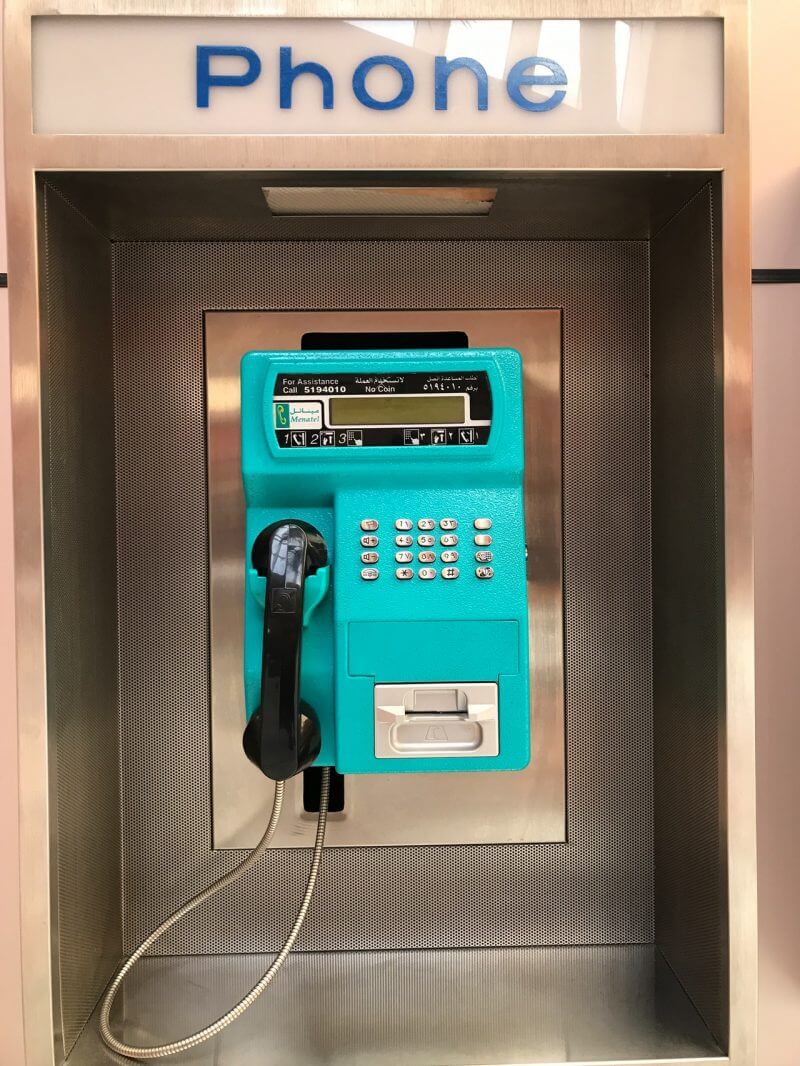
Tips for reducing phone call anxiety
It’s quite common to experience some level of anxiety around phone calls. This is especially common among younger people, who are more used to texting and messaging.
Some people feel anxious using the phone to do things like resolve a mistake or complain about a service. Even daily tasks like making a doctor’s appointment on the phone can make some people feel slightly stressed.
For anyone who is anxious talking on the phone, here are a few tips to feel calmer:
- Smile before you speak – your relaxed smile will sound in your voice.
- Plan what you want to talk about – even a few note jotted down can help you remember in the moment.
- Practise your opening lines out loud first so you get used to the sound of your own voice.
- Take slow, steady breaths before calling. Remind yourself it’s just a phone call, not life or death.
- Stand up – standing can make you sound more alert and confident. Walking around a bit while on the phone can also help to release nervous energy.
- Speak slowly and allow pauses – it’s not a problem to give a few seconds before responding during a conversation. You could always say “just a moment” if you need a few more seconds to think.
- Remember it’s a two-way conversation, not a monologue. The pressure isn’t all on you. The other person wants to understand, to be understood, and to communicate successfully. They might be anxious too.
- Reward yourself once it’s done. Every phone call builds confidence for the next one.
EFL lesson plan ideas for phone calls
Role-Play
Prepare slips of paper with phone call scenarios (e.g. calling to book a hotel room, phoning your manager to say you’re running late, calling tech support). Students work in pairs, each taking turns to be the caller and the receiver.
To add some extra fun, one student might answer as a “grumpy receptionist” or “confused customer.” It keeps things lively and tests English listening skills!
Mystery Caller
One student pretends to be calling a business. The other student is given a secret identity (e.g. a plumber, a dentist’s receptionist, an airline operator).
The caller must figure out who they’ve reached by asking polite, indirect questions. This is good for practising small talk and dealing with questions in English.
Customer Service Challenge
Play short audio clips of hold messages or customer service phrases (or teachers record their own). Students identify what’s happening: Are they being transferred? Put on hold? Asked to repeat details?
Then students can practise responding, using English telephone phrases like “That’s fine, I’ll hold” or “Could you transfer me to accounts, please?”
Real-Life Listening
Ask students to listen to short recorded English phone calls or authentic examples. Teachers could also record some themselves. Students should listen out for intonation, politeness and filler words (e.g. Right, Okay, I see, Uh-huh, Hmm).
Discuss what made each call sound natural, awkward, understanding, confrontational, patient, irritated, etc.
Share your thoughts on English phone calls
- What’s the most difficult part of a phone call for you? Understanding the other person, knowing what to say or trying to sound polite?
- Have you ever had a funny or confusing phone experience?
- Which telephone phrases do you find most useful?
- Why do you think speaking on the phone feels harder than talking face to face?
- Do you ever experience phone call anxiety? Do you have any tips to deal with feeling anxious when speaking on the phone?
- Teachers, how do you help students build confidence with phone calls in class?
- Students, what kind of real-life phone calls do you think you need to practise most? Booking something, making complaints, job calls or general chats?